What to Wear & Pack for a Kenai Fjords Cruise
Dress for the deck, not the dock. The layering system, the one jacket you cannot skip, and a full packing list for a Kenai Fjords day cruise from Seward.
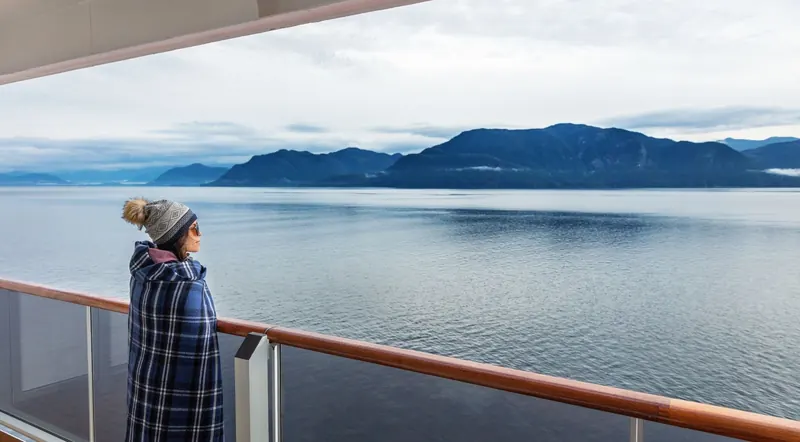
Dress for the deck, not the dock. Every boat out of Seward has a heated cabin with big windows, and you could spend the whole day inside it. But the calving glacier, the humpback that surfaces off the bow, the puffins coming off the sea stacks — all of it happens outside, in wind and spray and often rain. Passengers who dress for the sunny 60°F morning they saw at the harbor end up cold by mid-morning and retreat indoors, which means paying for a glacier cruise and then watching it through glass.
Getting this right takes no specialist kit and no extra suitcase. You need three layers, one genuinely waterproof jacket, warm hands and head, and a short list of small things that make the difference between enduring the day and enjoying it. This guide covers each item and why it matters in these particular conditions, how the list shifts from March to September, and what changes if you are kayaking, flying or taking a short bay cruise instead. There is a plain checklist at the end you can screenshot.
Still choosing a trip? Start with our Kenai Fjords boat tours guide, the half-day Resurrection Bay option, the full-day Northwestern Fjord cruise, or the operator-by-operator comparison. Prices and inclusions move between seasons, so check the current figures on the cruise you are considering before you pay:
The quick-glance packing list
Screenshot this and check it before you leave your hotel:
- Waterproof, windproof shell jacket with a hood — the one item you cannot skip
- Warm mid-layer — fleece or a light puffy
- Non-cotton base layer — merino or synthetic long-sleeve
- Warm hat and light gloves
- Closed-toe, non-slip shoes, waterproof if you have them, plus wool socks
- Polarised sunglasses, sunscreen, SPF lip balm
- Seasickness medication, taken before boarding, plus ginger chews or wristbands
- Small dry bag or daypack
- Camera, spare batteries, phone, binoculars
- Refillable water bottle and a snack
- Cash for tips, the snack bar and the gift shop
Everything below explains why each item is on the list, so you can adjust it for your month, your cruise and how much cold you are willing to stand.
What the weather on the water is like
Seward sits in a temperate rainforest on the edge of the Gulf of Alaska, and the weather out on the water behaves nothing like the weather in town.
It is colder on the water than on land, in every month. Seward’s summer air temperatures are mild — NOAA’s 1991–2020 normals put average highs and lows at roughly 59°F/46°F in June and 62°F/50°F in July and August — but the boat makes its own weather. Day boats run at speed between stops, which stacks a steady cold headwind on top of the air temperature, and cold air pours off the glaciers and the open water. A pleasant 60°F morning at the dock can feel like the low 40s on the back of a moving catamaran once wind and salt spray are in the mix. The National Park Service says it plainly on its official boat-tours page: “The best place to enjoy views of wildlife and scenery is out on deck, but the winds can be surprisingly cold, even on sunny days.”
Expect rain, and expect it sideways. Seward is one of the wetter towns in the United States, averaging about 70 inches of precipitation a year at the airport. June is the driest month, at about 2.3 inches over about 11 days with rain, and September is the wettest, at about 9.9 inches over about 17 days. Rain is possible on any date, and long unbroken wet spells happen even in the good months — in September 2012 the Seward airport recorded measurable rainfall on 26 of the month’s 30 days. Boats sail rain or shine, so the rain is something to dress for, not something to wait out.
Wind, glare and glacier cold. Beyond the mouth of Resurrection Bay the wind can be fierce, and it is coldest of all at the tidewater glaciers in Aialik Bay and Northwestern Fjord. A glacier generates its own weather, and the 20 to 60 minutes the captain holds position at the ice — the part of the day you came for — is the part where people give up and go inside. Meanwhile sun bouncing off water and ice burns exposed skin and tires your eyes even under grey cloud.
For the month-by-month picture, including which weeks give you the best odds on wildlife and settled seas, see our best time to visit guide.
Other experiences you might enjoy
A cruise is not the only trip to pack for. Helicopter flightseeing, guided sea kayaking in Resurrection Bay, and a walk at Exit Glacier each need their own gear.
The three-layer system
The National Park Service, both big Seward operators and every Alaskan who has done this say the same word: layers. Layering works here because you will move between a warm cabin and a cold deck a dozen times in a day, and because the temperature swings as the boat moves between sheltered bay, open gulf and glacier face. Three layers let you add and shed warmth in seconds.
Base layer: move the moisture
The layer against your skin has one job, which is to pull moisture away so you stay dry and therefore warm. Use merino wool or a synthetic. A long-sleeve top is the minimum; base-layer bottoms earn their place in spring and autumn, or any time you run cold.
Leave the cotton at the hotel. Cotton soaks up moisture, holds it against your skin, and stops insulating the moment it is damp from rain, spray or sweat — which is why outdoor instructors say “cotton kills”. A wet cotton T-shirt or hoodie on a cold, windy deck is miserable at best. Jeans are the same mistake in a different garment.
Mid layer: hold the heat
This is your insulation, and it works by trapping warm air. A fleece pullover, a wool sweater, or a light down or synthetic puffy all do the job. Fleece is the workhorse: warm, quick-drying, and still faintly insulating when damp. A packable puffy gives you more warmth for less bulk, which is what you want at the glacier stop. On a spring or September sailing, plenty of people bring both and wear both.
Outer layer: the one item you cannot skip
A waterproof and windproof shell with a hood is the single most important thing you will pack. It blocks the wind chill that makes the deck cold, and it keeps rain and salt spray out. Three things matter:
- Truly waterproof, not water-resistant. Marine spray is colder, saltier and far more wind-driven than city drizzle, and it finds seams, zips and hood edges. A jacket that shrugs off a rainy commute can wet through out here. Look for a shell with taped or sealed seams.
- A hood, because an umbrella is useless. More on that below.
- Rain trousers are optional on a standard cruise and genuinely useful if you plan to stand out on the bow through a wet crossing. They are part of the kit for kayaking, and there the guide supplies them.
The rhythm on deck is simple: keep the shell on outside, open or drop the mid-layer when you duck into the cabin to warm up, and put it back on before the next whale.
Head, hands, feet and eyes
The three big layers get the attention, and the cold arrives at your extremities first.
- Warm hat. Yes, in July. A lot of heat leaves through your head, and the wind on deck is constant. Pick one that fits snugly or ties under the chin, because loose hats go over the rail and do not come back.
- Gloves. Light, water-resistant gloves cover most summer sailings; take warmer ones in spring and autumn. Choose a pair you can still work a camera in, or you will take them off at exactly the wrong moment.
- Closed-toe, non-slip, rubber-soled shoes. Decks get wet and slick. Waterproof shoes or light waterproof boots are ideal, and waterproof low hiking shoes handle the whole trip including a glacier walk. Sandals, flip-flops and heels are unsafe on a moving wet deck and leave your feet cold. Pair them with wool or synthetic socks, and pack a spare pair.
- Polarised sunglasses. Glare off water and ice is tiring, and polarised lenses cut it. They also make it noticeably easier to pick wildlife out of the water, which is the real reason to bring them.
- Sunscreen and SPF lip balm. Reflection off water and ice burns skin under overcast sky, and Alaska’s long summer days mean hours of exposure. Put it on before you board.
What to carry: the gear that changes the day
Binoculars. Wildlife is usually further away than people expect, and park regulations keep boats at a distance from animals. A decent pair turns a grey speck into an orca, a puffin or a mountain goat on a cliff. On a moving boat 8x42 is the sweet spot: 8x magnification stays steady on a rolling deck, and 42mm lenses gather enough light for a grey Alaskan morning. Anything above 10x is hard to hold still.
Whether the boat lends you a pair depends on the operator, and on this site the split is clean. Major Marine lists binoculars to use on board in the inclusions for its Glacier Cruise with Lunch and its Extended Glacier Cruise. Kenai Fjords Tours does not list them on any of its cruises. Bringing your own also means nobody in your group has to share. Our whale watching and wildlife guides cover what you will be scanning for.
A camera, and something to protect it. A camera with a zoom lens will beat a phone for wildlife by a wide margin; a phone is fine for glaciers and scenery. Either way:
- Bring spare batteries and keep them warm in an inside pocket. Cold drains lithium cells quickly on an exposed deck.
- Plan for spray. A rain cover, or even a large zip-lock bag, plus a microfibre cloth for the salt mist that settles on the front of the lens.
- Use a secure strap, and bring extra memory cards.
- Leave the tripod behind. It is unusable on a moving boat, and Major Marine’s FAQ states that tripods are prohibited. A polarising filter is the accessory that earns its place, because it cuts the glare off water and ice.
- A waterproof phone case or pouch costs very little next to the phone you drop over the side.
A small dry bag or waterproof daypack to hold shed layers, electronics, snacks and your seasickness kit, and that you can sling on and off as you move around the boat.
A seasickness kit. Even the calm-water cruises can meet swell, and the full-day trips that cross the open Gulf of Alaska are the ones that move. The rule that matters most: take the medication before you board, not after you feel unwell — once nausea starts, the stomach slows and an oral dose may not absorb. Meclizine (Bonine, Dramamine Less Drowsy) goes in about an hour before departure and dimenhydrinate (Dramamine Original) about 30 to 60 minutes before; a prescription scopolamine patch goes on hours ahead. Ginger chews and acupressure wristbands are the drug-free options. Crews often carry remedies, and bringing your own is better than hoping. Our seasickness guide covers choosing between them, where to stand, and which cruise is calmest.
Food, water and cash. Bring a refillable water bottle and a snack. On the full-day park cruises a meal is included and the pattern differs by operator: Major Marine serves a deli lunch with a choice of turkey, roast beef or vegetarian, plus free coffee, tea and water, while Kenai Fjords Tours serves a hot lunch, and its 8-hour Northwestern Fjord tour adds a light breakfast. The half-days split: Kenai Fjords Tours’ Resurrection Bay sightseeing cruise includes a hot lunch, and Major Marine’s half-day wildlife cruise lists no meal at all. Check the inclusions on your own booking, and bring cash for crew tips, the snack bar and the gift shop.
Personal items. Any medication you take, hand warmers for the glacier stop and the shoulder season, a buff or scarf, and a dry pair of socks in the bag.
What not to bring
- Cotton as a warm layer. Jeans and a cotton hoodie are the classic error. They soak, and then they chill.
- An umbrella. Alaskan wind turns umbrellas inside out, and they are unusable on an open deck. The hood on your shell is the answer.
- Sandals, flip-flops or heels. Unsafe on a wet deck, and cold.
- Heavy luggage. Kenai Fjords Tours asks guests to limit what they carry aboard to one bag per person per seat, and both big operators prohibit coolers, large bags, glass containers and personal alcohol.
- A full-size tripod. Impractical, and prohibited.
- The assumption that the cabin will do the work. It will keep you warm. You just will not want to be in it.
- Confidence from a clear morning. Leaving the rain shell at the hotel because the sky looked good at 7 a.m. is the most common regret on these boats. Take it every time.
How the packing changes by month
The layering system holds all season. What changes is the weight of each layer and how seriously you treat the rain.
- Spring gray-whale cruises, roughly March to May, are the coldest sailings of the year. Major Marine’s own blog on its gray-whale season gives average temperatures of 26/38°F in March, 33/45°F in April and 40/53°F in May, and adds that it “will feel about 10 degrees cooler on the water” — figures from a 2018 post, so treat them as illustrative of the pattern rather than as this year’s numbers. Pack heavy: proper warm layers, base-layer bottoms, warm gloves, and a hat that will not blow away. Our Resurrection Bay cruises guide covers these early-season trips.
- May, early June and September are colder and wetter than midsummer. September is the wettest month of the year here, so this is when rain trousers stop being optional and an extra warm layer earns its space.
- July and August are the mildest weeks, and mild here still means cool, breezy and possibly wet. You need the same list; you will carry more of it in the bag and wear less of it.
The rule that covers every month: pack for cold and wet whatever the forecast says. Better weather is a bonus you can shed layers for.
Dress for the deck, not the dock
It is worth saying again, because it decides every item above. The boat has a heated cabin with wide windows, and the reason you booked is outside it: the wall of ice with the engines cut, the blow of a humpback, the sea lions hauled out on a rock, the scale of a fjord that no photograph carries. That is two, three, sometimes five hours of standing still in moving cold air. People who dressed for the dock spend it inside looking out. People who dressed to stand comfortably outside get the day they paid for. When you are unsure, take the extra layer — you can always put it back in the bag.
Kayaking, helicopters and hikes: what changes
A cruise is the baseline. A few Seward trips work differently:
- Sea kayaking. Guides supply the technical gear — dry suits or dry tops, spray skirts, rubber boots, buoyancy aids and often neoprene gloves. Your own waterproof shell can stay in the car. Your job is warm non-cotton base and mid layers underneath, warm socks, and a hat and gloves. Most outfitters can lend or rent rain gear if you turn up without any. See our kayaking guide.
- Helicopter and glacier-landing flights. Closed-toe, sturdy shoes are mandatory, and warm layers matter because it is cold the moment you step onto the ice, even in July. Glare up there is stronger than at sea level, which makes the sunglasses part of the kit. Operators usually provide overboots or cleats that go over trainers, and some lend jackets. See our helicopter and flightseeing guide.
- Exit Glacier and the Harding Icefield Trail. Waterproof footwear with real grip, layers and rain gear, and an allowance for conditions changing as you climb. The Exit Glacier nature hike is the gentle version; the Harding Icefield Trail hike is a long, steep day. Details in our glaciers guide.
- Half-day against full-day cruises. A half-day Resurrection Bay cruise stays in sheltered water, which makes it a little less exposed and a little less likely to make you queasy. It is still cold and windy on deck, so dress the same. A full-day cruise crosses open Gulf of Alaska water to reach the tidewater glaciers, which means more wind, more spray, a colder glacier stop and better odds of swell. The further out the boat goes, the more the warmth and the seasickness kit matter: Major Marine’s 8.5-hour Northwestern Fjord Cruise, its most exposed sailing, does not accept children under 12 for that reason.
For the wider picture of which trip to take, start with the national park guide and the operators compared breakdown, and if you are still choosing between destinations, our Kenai Fjords vs. Glacier Bay comparison.
Packing for kids and families
Children do well on these cruises with a little more preparation than adults need.
- Kids get cold faster, so over-pack their layers: non-cotton base layers, a warm fleece or puffy, and a waterproof jacket. A bright colour is easier to find on a busy deck. Hat and gloves are not negotiable.
- Bring a full change of clothes and extra socks. Children find the puddles, the spray and the wet railings.
- Snacks and something to do for the drive down and the quiet stretches on the water, because wildlife watching has lulls.
- Seasickness care for children needs its own thought. Children’s formulations exist and acupressure bands are drug-free, and dosing is age- and weight-dependent, so ask a pharmacist or paediatrician first. Our seasickness guide has the detail.
- Check the age minimum on the longest trips. The most exposed open-water sailings restrict young children. Our Anchorage day-trip guide and where to stay in Seward cover the rest of the family logistics.
The complete packing list
Clothing
- Waterproof and windproof shell jacket with a hood
- Mid-layer: fleece, light puffy, or both
- Non-cotton base-layer top (merino or synthetic), plus bottoms in spring and autumn
- Warm non-cotton trousers — hiking or quick-dry, not jeans
- Rain trousers (optional; take them in spring, autumn, or for a lot of bow time)
- Warm hat
- Light, water-resistant gloves
- Wool or synthetic socks, plus a spare pair
- Closed-toe, non-slip, waterproof shoes or light boots
Accessories
- Polarised sunglasses
- Sunscreen and SPF lip balm
- Buff or warm scarf
- Hand warmers for the glacier stop and the shoulder season
Gear
- Binoculars, 8x42 if you are buying for this
- Camera with a zoom lens
- Spare camera batteries, kept warm, plus memory cards
- Lens cloth and a rain cover or zip-lock bag
- Waterproof phone case
- Small dry bag or waterproof daypack
Seasickness kit
- Motion-sickness medication, taken before boarding
- Ginger chews
- Acupressure wristbands
Essentials
- Refillable water bottle
- Snacks
- Cash for tips, the snack bar and the gift shop
- Any personal medication
- Booking confirmation
For children: extra layers, a full change of clothes, spare socks, snacks, and something to do in transit.
Frequently asked questions
What should I wear on a Kenai Fjords cruise? Three layers: a non-cotton base layer, a warm fleece or puffy in the middle, and a waterproof, windproof shell with a hood on top. Add a warm hat, light gloves, closed-toe non-slip shoes and polarised sunglasses. Both major Seward operators and the National Park Service recommend the same system.
Is it cold on the boat? Yes. It is colder on the water than on land in every month, and the boat’s own motion adds a constant cold headwind. A 60°F morning at the dock can feel like the low 40s on deck, and the glacier stop is colder again. The cabin is heated, and the best viewing is outside it.
Do I need rain gear if the forecast is sunny? Yes. Seward is a temperate rainforest averaging about 70 inches of rain a year at the airport, and the weather changes through the day. Take the waterproof shell every time; dry, sunny weather is a bonus rather than something to plan around.
What shoes should I wear on a Kenai Fjords cruise? Closed-toe, non-slip, rubber-soled shoes. Waterproof shoes or light boots are ideal because decks get wet, and waterproof low hiking shoes cover a glacier walk too. Avoid sandals, flip-flops and heels, and wear wool or synthetic socks.
Do I need to bring binoculars? They make a real difference, because wildlife is often distant and regulations keep boats back from animals. On a moving boat an 8x42 pair works best. Major Marine lists binoculars to use on board on its half-day, 6-hour and Extended cruises; Kenai Fjords Tours does not list them, so check your own booking. Bringing your own means nobody in your group shares.
Is lunch included on a Kenai Fjords cruise? On the full-day park cruises, yes. Major Marine serves a deli lunch with free coffee, tea and water; Kenai Fjords Tours serves a hot lunch, and its 8-hour Northwestern Fjord tour adds a light breakfast. The half-days differ: Kenai Fjords Tours’ Resurrection Bay sightseeing cruise includes a hot lunch and Major Marine’s half-day wildlife cruise lists no meal. A snack bar and a bar are available to buy from on the big boats.
What should I not bring on a Kenai Fjords cruise? Cotton warm layers such as jeans and cotton hoodies, an umbrella, sandals or heels, heavy luggage, a full-size tripod, glass containers and your own alcohol. Tripods and personal alcohol are prohibited by the operators, and Kenai Fjords Tours limits guests to one bag per person per seat.
How do I dress for whale watching in Alaska? The same three layers, with extra attention to the hat, the gloves and the hood, because whale watching means standing still on a windy deck scanning for a blow. Polarised sunglasses help you pick the spout out of the chop, and binoculars and a zoom lens are the two things people wish they had brought.
Do the boats provide blankets or rain gear? Do not plan on blankets; dress warmly enough not to need one. Kenai Fjords Tours’ FAQ notes that its gift shop sells rain-proof coats, hats and gloves if you arrive without them. Binocular, rain-gear and blanket policies vary by company and by cruise, so confirm with your operator.
What should kids wear on a Kenai Fjords cruise? The same layers as adults and more of them, because children get cold faster: non-cotton base layers, a warm mid-layer, a waterproof jacket, a hat and gloves, plus a full change of clothes and spare socks in the bag.
Is it really colder on the water than on land? Consistently, yes. Wind chill from the moving boat, cold air draining off the glaciers and the open water, and salt spray all combine, so the deck feels far colder than the dock even on a warm, clear day.
Do I need waterproof trousers? Not for a standard summer cruise if you plan to move in and out of the cabin. They are genuinely useful if you intend to stand out on the bow through a wet crossing, on a spring or September sailing, or if you feel the cold. For kayaking they are supplied, as part of a dry suit.
Pack for the deck and you will spend the day out on it, warm and dry, watching for a blow and a wall of ice instead of watching the window steam up. Ready to book? Compare every option in our Kenai Fjords boat tours guide, see how the operators differ in our operators compared breakdown, and plan the rest of the trip with our Seward things-to-do guide.
See a Glacier Calve Into the Sea
The most-booked cruise in Kenai Fjords National Park — more than 940 guests, 4.8 out of 5. A tidewater glacier, a deli lunch on board, and free cancellation up to 24 hours before you sail.
Check Availability & Book