Resurrection Bay Cruises: The Half-Day Kenai Fjords Option
The honest guide to half-day Resurrection Bay wildlife cruises from Seward — who they suit, what you'll see, and why they skip the glaciers.
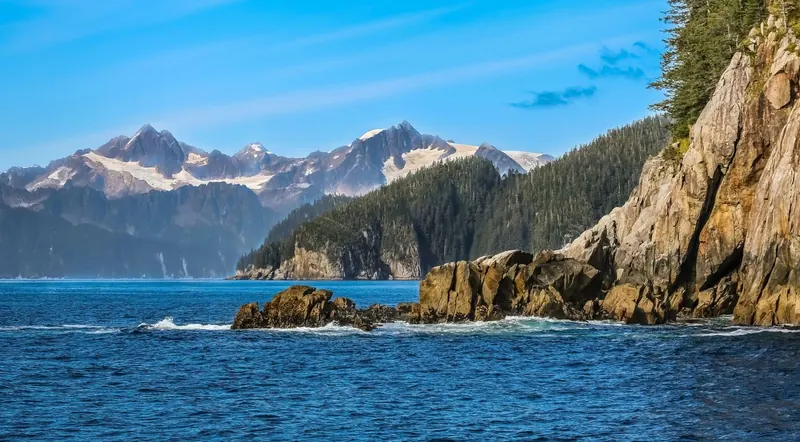
A Resurrection Bay cruise is the shorter, calmer, cheaper way to get on the water in Seward — roughly a 3-to-4.5-hour wildlife trip that stays inside the sheltered bay. It’s the right choice if you’re short on time, prone to seasickness, travelling with young kids or older relatives, on a budget, or stepping off a cruise ship or the train with only part of a day to spare. But there’s one honest caveat you should know before you book: a Resurrection Bay cruise does not reach the tidewater glaciers of Kenai Fjords National Park. You won’t watch a wall of ice calve into the sea. If that’s the single image you came to Alaska for, see our full boat tours guide for the longer options. If wildlife, scenery and comfort matter more than standing in front of a glacier, read on — this may be the best-value few hours you spend in Seward.
Resurrection Bay cruise vs. the national park cruise: quick comparison
| Resurrection Bay half-day cruise | Kenai Fjords national park cruise | |
|---|---|---|
| Typical duration | 3–4.5 hours | 6–8.5 hours |
| Reaches a tidewater glacier? | No (Bear Glacier viewed at a distance only) | Yes (Aialik, Holgate or Northwestern) |
| Water conditions | Sheltered, generally calm | Open-Gulf crossing around Aialik Cape; can be rough |
| Price tier | Lowest-priced cruise option | Higher; the longest trips cost the most |
| Wildlife | Otters, seals, sea lions, eagles, seabirds, goats; whales in season | Same, plus more time and range on the water |
| Best for | Time-pressed, seasickness-prone, families, budget, day-trippers | Glacier-seekers, photographers, first big Alaska splurge |
| Meal | Often none, or a light lunch (operator-dependent) | Usually includes a hot deli lunch |
Use this as your decision shortcut: the longer you stay on the water, the further you travel and the closer you get to glaciers — but the more the trip costs and the rougher the ride can be. Everything below explains how to make that trade-off for your own group.
Other experiences you might enjoy
Many visitors pair a bay cruise with helicopter flightseeing over the Harding Icefield, sea kayaking in Aialik Bay, or a hike at Exit Glacier.
What Resurrection Bay actually is
Resurrection Bay is a large, deep fjord on the southeastern coast of the Kenai Peninsula, and Seward sits right at its head. It runs roughly north–south for a maximum length of about 18 miles (29 km) from the mouth of the Resurrection River down to the Gulf of Alaska, reaches a maximum width of about 5 miles (8 km), and is genuinely deep — a maximum depth of about 972 feet (296 m) near Caines Head, with an average depth of about 500 feet (150 m). In its outer reaches it’s also known as Blying Sound, and the passage between Rugged and Cheval Islands carries the name Harding Gateway.
Two features matter for a cruise. First, the bay never freezes. Its depth, its connection to the open Gulf, and the surrounding terrain keep it ice-free year-round, which is exactly why Seward became a strategic deep-water port and the ocean end of the Alaska Railroad. Second — and this is the honest part — most of Resurrection Bay lies outside the Kenai Fjords National Park boundary. The park proper sits southwest of the bay, out along the fjord-cut outer coast. That’s why operators describe these shorter trips as “wildlife” or “Resurrection Bay” cruises rather than national park cruises: they explore beautiful, wildlife-rich water that’s technically adjacent to, rather than inside, the park.
A little history you’ll hear narrated onboard
The bay was named by Russian fur-trade administrator Alexander Baranov, who is said to have sheltered here from a Gulf storm around 1792 and named the anchorage for the Russian Orthodox Easter — the “Sunday of Resurrection.” The first ship built in Russian Alaska, the Phoenix, was constructed nearby in 1794.
Across the water sits Fox Island, where the American painter Rockwell Kent spent the winter of 1918–1919 with his young son; the art and journal he produced there made the island quietly famous. And no narration skips the 1964 Good Friday earthquake — a magnitude-9.2 megathrust that struck at 5:36 p.m. local time, the largest recorded earthquake in U.S. history, which devastated Seward. A 3,511-foot section of the waterfront slid into the bay in a submarine landslide, generating local waves within minutes; the larger main tsunami arrived roughly 20 minutes later, and burning oil spread across the water. Eleven to thirteen people died in Seward, and the waterfront — railroad docks, the tank farm — was destroyed. On calm days you can still see pilings and remnants along the shore. The bay is ringed by peaks, hanging glaciers and the distant white tongue of Bear Glacier spilling from the Harding Icefield — the scenery is the other half of the show.
The half-day cruise products: who runs them
Kenai Fjords National Park doesn’t run boat tours itself. As the National Park Service’s Kenai Fjords boat-tours page makes explicit, the park “does not have any authorized concessioners or park rangers on boat tours, nor can it recommend specific companies.” So the older idea that a ranger narrates from onboard, or that these are official “park” cruises, no longer applies — narration comes from the operators’ own captains and crew. Here are the main choices for a Resurrection Bay half-day trip.
Major Marine Tours — 4-hour wildlife cruise
Major Marine’s shorter option stays in the calm, protected water of Resurrection Bay on a “Captain’s Choice” route set by the day’s wildlife reports. Complimentary coffee, tea and water are provided, snacks, beer and wine are available for purchase, and binoculars are handed out onboard — this is the cruise President Obama took on his 2015 Alaska visit. Major Marine also runs a spring gray-whale-focused version of the same idea (see the season section below).
This half-day cruise isn’t in this site’s GetYourGuide catalog, so contact Major Marine directly if its route and Captain’s Choice format appeal.
Kenai Fjords Tours — a Resurrection Bay sightseeing option
Seward’s original cruise operator (running since 1978) also runs shorter, sightseeing-focused Resurrection Bay trips that stop at Thumb Cove and Cape Resurrection rather than pushing into the national park. Resurrection Bay Half-Day Sightseeing Cruise — from $150 (4.7/5 from 99 reviews) is the bookable version of this itinerary on GetYourGuide, and it’s the tour we’ve featured above.
Small-boat operators (six passengers or fewer)
For a more personal trip, a couple of owner-run outfits carry no more than six guests. Northern Latitude Adventures offers a shorter Resurrection Bay excursion with snacks, water and soft drinks included, timed to line up with the same-day round-trip train schedule. Seward Ocean Excursions, run by husband-and-wife captains, operates custom-built catamarans year-round and is notably candid about the glacier trade-off — their staff will tell you upfront that Bear Glacier, while stunning, is not a tidewater glacier. These small operators aren’t sold through this site’s GetYourGuide catalog; contact them directly if a smaller boat and a more flexible schedule matter more to you than online booking.
Dinner cruises
If you specifically want an evening trip, note that the sit-down dinner cruise out of Seward is actually a full national-park cruise that travels to a tidewater glacier with a plated meal served onboard — Kenai Fjords Tours’ Glacier Dinner Cruise — not a short in-bay dinner cruise. It is no longer listed on GetYourGuide, so book that one direct with the operator; our operators compared guide covers the rest of its line-up. There is no current short Fox Island salmon-bake day cruise confirmed on any Seward operator’s 2026 line-up; if a dedicated evening Resurrection Bay dinner trip matters to you, ask operators directly before booking around it.
What you see on a Resurrection Bay cruise
Let’s be specific and honest — both about what’s genuinely good and about what you give up.
Wildlife
Resurrection Bay is a productive, protected marine ecosystem, and wildlife shows up fast — often within minutes of leaving the harbor. Expect a strong chance of:
- Sea otters rafting in the calm water, frequently right off the harbor
- Harbor seals and Steller sea lions hauled out on rocks, especially near Cape Resurrection at the bay mouth
- Bald eagles on markers, spires and shoreline trees
- Dall’s porpoises riding the bow wave
- Seabirds in quantity — black-legged kittiwakes, common murres, cormorants, and puffins near the outer cliffs and rookeries
- Mountain goats on the cliffs between Caines Head and Callisto Head — a stretch guides nickname “goat alley,” and one of Alaska’s best places to see goats near sea level, with nannies and newborn kids on the shoreline in late May and early June
- Humpback whales and orcas in season, which do come into and around the bay
Scenery
The classic route is roughly a 55-mile loop down the western shore and back. Highlights include Thumb Cove, with dramatic rock faces, waterfalls and cirque/hanging glaciers above it; the wooded slopes of Caines Head, crowned by the WWII-era Fort McGilvray; Cape Resurrection’s sea cliffs, caves and seabird colonies; Rugged Island; and the sea stacks and pinnacles of Spire Cove. Past Callisto Head, on a clear day, the enormous white tongue of Bear Glacier comes into view across the water.
What you do NOT see — read this before booking
This is the crucial honest distinction. A Resurrection Bay cruise does not reach a tidewater glacier and you will not watch ice calve into the sea. Bear Glacier — the largest of Kenai Fjords National Park’s glaciers, stretching about 12 miles long and lying roughly 17 miles from Seward — is the only glacier these trips approach, and even then only from a distance: it ends in its own freshwater lagoon behind a terminal moraine, its lagoon sits several miles beyond the shoreline, and boats view it across the water rather than pulling up to its face. The active tidewater glaciers — Aialik, Holgate and Northwestern, all covered in our Kenai Fjords glaciers guide — are out in the national park proper, reachable only on the longer cruises. If watching a glacier calve is your priority, a Resurrection Bay cruise will leave you short.
Who a Resurrection Bay cruise is right for
For a lot of travellers, this is genuinely the smarter booking — not the consolation prize. It suits:
- Travellers short on time. Half a day on the water still leaves the afternoon or evening for the SeaLife Center, Exit Glacier or dinner in town.
- Anyone prone to seasickness. This is the single biggest reason to choose it — see our full Kenai Fjords cruise seasickness guide for the complete picture.
- Budget travellers. The Resurrection Bay cruise is the lowest-priced cruise option in Seward — a big saving over the 6-to-8.5-hour trips.
- Families with young children. Shorter running time suits short attention spans, the water is calmer, restrooms and indoor cabins are onboard, and operators explicitly market these as family cruises.
- Elderly or less-mobile passengers, who may find a full day at sea tiring and the open-water swell uncomfortable.
- Cruise-ship passengers. Ships tie up right at the Seward waterfront, usually in the morning, and an afternoon 3-to-4.5-hour cruise fits a port day without risking the ship’s departure.
- Train day-trippers. The Alaska Railroad Coastal Classic runs a scenic summer schedule between Anchorage and Seward, and the shorter afternoon cruises are timed to fit that window — see our Anchorage to Seward guide for the full transport picture.
- People who care more about wildlife than glaciers. The bay delivers otters, eagles, sea lions, goats and often whales in a compact, comfortable trip.
- Early- and late-season visitors, especially in spring, when gray-whale cruises are the main game in town.
Who should choose a longer cruise instead
Be honest with yourself about your priorities. If your main goal is to see a tidewater glacier calve, or to say you’ve been into the national park itself, book a longer cruise — a 6-hour-plus Kenai Fjords / Aialik Bay cruise, or the full-day Northwestern Fjord Glacier & Wildlife Tour for the deepest reach into the park. Those trips cross open Gulf water around Aialik Cape, take most of a day, and cost more, but they’re the ones that put you in front of active ice. See our Kenai Fjords boat tours guide, our glaciers guide, the dedicated Northwestern Fjord cruise guide and our operator comparison to choose. The trade-off in one line: Resurrection Bay buys you comfort and time; the national park cruises buy you glaciers.
Seasickness and comfort: the real reason many people choose this cruise
If you get motion sick, this is your cruise. Resurrection Bay is sheltered by mountains and barrier islands, and a half-day trip stays inside it — there’s no open-ocean crossing around Aialik Cape, which is where the longer national park cruises can get genuinely rough. Even the National Park Service advises that if you’re prone to seasickness you should consider a shorter trip within the more protected waters of Resurrection Bay. Major Marine puts the odds plainly: on the in-bay cruise, seasickness is typically unlikely.
A few practical tips: take motion-sickness medication (Dramamine or Bonine) before you board, not after you start feeling ill — once you’re queasy it’s too late. Operators often sell it at check-in and onboard. Stay out on deck with your eyes on the horizon rather than inside, and pick a calmer forecast day if you can. For the full playbook — medication comparisons, natural remedies and exactly what to do if you feel sick — see our Kenai Fjords cruise seasickness guide.
Season and timing
The Seward cruise season runs roughly March through October, with the shorter Resurrection Bay trips concentrated in spring and summer. Two big timing questions:
Spring (March–mid-May): gray whales. This is the one thing you can see now that you can’t in July. California gray whales migrate past the mouth of Resurrection Bay on their long run from Baja to the Arctic, and operators run dedicated spring gray-whale cruises to intercept them. Days are cold, so dress in warm waterproof layers.
Summer (June–August): peak wildlife. This is when humpbacks and orcas are most reliable, seabirds are nesting, goats are on the cliffs, and every operator runs a full schedule. Morning departures get you back for lunch and a free afternoon; afternoon departures suit late risers, train arrivals and cruise-ship days.
For a month-by-month breakdown across all cruise types, see our best time to visit guide and whale watching guide.
Wildlife odds: what to realistically expect
Wildlife is never guaranteed, but the bay delivers. Major Marine reports that on its 4-hour Resurrection Bay cruises it sees whales on about 75% of trips between June and mid-August — and adds the honest rider that the longer you’re on the water, the greater your chances are of seeing whales. That’s the trade-off in a nutshell: your odds of a whale are good on the short cruise and better on the long one, but the short cruise still puts you among otters, eagles, sea lions and goats with near-certainty. Two things help the bay punch above its length: it’s a rich, protected ecosystem, and captains work the radio and known hot spots to maximise sightings within the time available.
Practical booking information
- Where it leaves from: the Seward Small Boat Harbor. Large operators have check-in offices near the harbor; small operators check you in at their harbor kiosks.
- Check-in: the big operators generally ask you to arrive about an hour before departure; small operators want you there a little earlier. Don’t cut it fine.
- Parking: operators run free or low-cost lots with shuttles to the dock in peak season — confirm details when you book.
- What’s included: varies by operator and itinerary — some short cruises include a hot lunch, others include no meal at all (drinks and snacks are usually available for purchase). Assume you may need to bring or buy food.
- What to bring: warm layers with a windproof/waterproof shell (the deck is cold even on sunny days), a hat and gloves, sunglasses and sunscreen, a camera and binoculars, and motion-sickness medication if you need it.
- Book ahead: summer sailings sell out; reserve online in advance for the best rate and to lock in your preferred departure.
- Fill the rest of your day: pair a half-day cruise with a trip to things to do in Seward, a visit to Exit Glacier, or a relaxed afternoon in town. If you’re staying over, see where to stay in Seward; if you’re coming down for the day, see our Anchorage day trip guide. Dress for the deck either way — our packing guide covers the layers.
Resurrection Bay beyond the cruises
A cruise is only one way to enjoy the bay. Sea kayaking in Resurrection Bay — around Lowell Point, Tonsina Point and Fox Island — is a superb calm-water paddle for beginners; see our kayaking guide. Fishing charters target the bay’s halibut, rockfish and silver salmon. And you can experience the shoreline on foot: the Tonsina Point and Caines Head Coastal Trail from Lowell Point (tide-dependent) leads to beaches, Fort McGilvray and big bay views. For wildlife identification across the region, see our wildlife guide, and for the big picture start with the Kenai Fjords National Park pillar guide.
Ready to book?
If comfort, budget and time are your priorities, book a Resurrection Bay wildlife cruise — it’s the easiest, calmest, best-value way to get on the water in Seward. If you’re set on standing in front of a calving tidewater glacier, book one of the longer Kenai Fjords national park cruises instead. Either way, reserve early for summer, and dress warmer than you think you need to.
Frequently asked questions
What is a Resurrection Bay cruise? It’s a shorter wildlife-and-scenery boat tour (about 3–4.5 hours) that stays inside sheltered Resurrection Bay near Seward, rather than travelling out to the tidewater glaciers of Kenai Fjords National Park. Think otters, seals, sea lions, eagles, seabirds, goats and — in season — whales, set against fjord scenery.
Does a Resurrection Bay cruise go to the glaciers? No. It does not reach the park’s tidewater glaciers (Aialik, Holgate, Northwestern), and you won’t see ice calving. On a clear day you may see Bear Glacier in the distance, but only across the water. For glaciers up close, book a 6-hour-plus national park cruise.
Is a Resurrection Bay cruise good if I get seasick? Yes — it’s the top recommendation for seasickness-prone travellers. The bay is sheltered and there’s no open-Gulf crossing, so the ride is much calmer than the long park cruises. Take motion-sickness medication before you board.
How long is a Resurrection Bay cruise? Roughly 3 to 4.5 hours, depending on operator.
Will I see whales on a Resurrection Bay cruise? Often, in season. Major Marine reports seeing whales on about 75% of its 4-hour cruises between June and mid-August. Sightings are never guaranteed, and your odds rise the longer you’re on the water — but otters, eagles, sea lions and goats are near-certain.
Is a Resurrection Bay cruise good for kids? Very. The shorter duration suits short attention spans, the calm water is gentler, there are restrooms and heated cabins onboard, and operators specifically market these as family cruises.
Is a Resurrection Bay cruise worth it? If you value wildlife, comfort, time and cost over seeing a glacier up close, yes — it’s excellent value and consistently well reviewed. If a calving tidewater glacier is a must-see, spend the extra for a longer cruise instead.
Resurrection Bay cruise vs. Kenai Fjords cruise — which is better? Neither is universally “better.” Resurrection Bay wins on price, calm water and time; the Kenai Fjords national park cruise wins on glaciers and range. Choose the bay if you’re short on time, seasick-prone or on a budget; choose the park cruise if glaciers are the goal. For a broader regional comparison, see our Kenai Fjords vs. Glacier Bay guide.
Can you see Bear Glacier from a Resurrection Bay cruise? Sometimes, weather permitting — you view it at a distance across the water past Callisto Head. You do not reach its face or its iceberg-filled lagoon; that requires a helicopter or water-taxi-and-kayak trip. See our helicopter and flightseeing guide for the aerial option.
What’s the cheapest cruise in Seward? The Resurrection Bay / half-day wildlife cruise is the lowest-priced cruise option — check the live price above, since operator pricing changes.
Is a Resurrection Bay cruise good for a cruise-ship day in port? Yes — ships dock right at the Seward waterfront, and a 3-to-4.5-hour afternoon cruise fits comfortably within a port day. Just leave a buffer before your ship’s all-aboard time.
When do the spring gray-whale cruises run? Roughly March through mid-May, timed to the northbound gray-whale migration.
See a Glacier Calve Into the Sea
The most-booked cruise in Kenai Fjords National Park — more than 940 guests, 4.8 out of 5. A tidewater glacier, a deli lunch on board, and free cancellation up to 24 hours before you sail.
Check Availability & Book