Kenai Fjords vs. Glacier Bay vs. Prince William Sound
Kenai Fjords, Glacier Bay or Prince William Sound? An honest, detailed comparison of Alaska's top glacier-and-wildlife cruises — access, cost, wildlife & more.
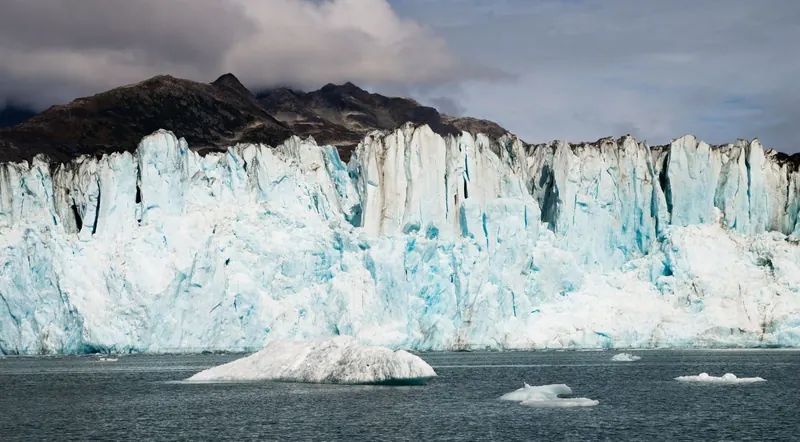
If you only have time and budget for one Alaska glacier-and-wildlife cruise and you’re travelling on your own — not on a big cruise ship — Kenai Fjords National Park out of Seward is the best all-around choice for most people. It’s the easiest to reach independently from Anchorage by road or rail, the simplest to do as a self-planned day trip, and it delivers a rare combination of active tidewater glaciers and open-ocean marine wildlife. That said, each of the three great destinations excels at something different: choose Kenai Fjords for accessible glaciers plus wildlife, Prince William Sound (from Whittier) for the most glaciers in the calmest water closest to Anchorage, and Glacier Bay for a remote, world-heritage wilderness most people experience from the deck of a large cruise ship.
Below is a detailed, fair comparison to help you decide — without talking any of them down. They’re all superb; they just suit different travellers.
First, clear up the “Glacier Bay vs Glacier National Park” confusion
Before anything else, a quick disambiguation that trips up thousands of searchers every year: there is no “Glacier National Park” in Alaska. Glacier National Park is in Montana, on the Continental Divide — a land-based park of alpine lakes and hiking trails, and no cruise goes there. When people search “glacier national park alaska” or “alaska glacier national park,” what they almost always want is Glacier Bay National Park & Preserve, the marine wilderness in Southeast Alaska near Gustavus and Juneau. The two parks share a word and nothing else: one is a Rocky Mountain hiking park, the other a fjord-and-tidewater-glacier park you explore by boat. If glaciers calving into the sea and whales are what you’re picturing, you want an Alaska cruise — Kenai Fjords, Glacier Bay, or Prince William Sound — not Montana.
The master comparison at a glance
| Kenai Fjords (Seward) | Glacier Bay (Gustavus) | Prince William Sound (Whittier/Valdez) | |
|---|---|---|---|
| Access from Anchorage | ~2.5 hrs by road/rail (127 mi to Seward) | Flight only (via Juneau to Gustavus) or cruise ship | Whittier ~1.5 hrs by road/rail (60 mi); Valdez a long drive |
| Independent day trip? | Yes — easy | No — needs a flight + overnight, or a cruise ship | Yes — easy from Whittier |
| Glaciers | Fewer but very active tidewater glaciers (Aialik, Holgate, Northwestern) + the Harding Icefield | Very high count; famous tidewater glaciers (Margerie, Grand Pacific, Johns Hopkins, Lamplugh) | Highest concentration of tidewater glaciers in the region; College Fjord, Columbia, Meares |
| Wildlife | Excellent — whales, orcas, sea lions, puffins, seabird colonies in productive open water | Strong — humpbacks, orcas, brown/black bears, seals on ice, mountain goats | Very good — otters, seals, sea lions, whales, kittiwakes |
| Water conditions | Sheltered Resurrection Bay + an open-Gulf crossing (can be bumpy) | Sheltered bay; moderate | Calmest — sheltered, enclosed Sound |
| NPS ranger aboard? | No (per NPS, updated Sept 2025) | Yes — on the day boat and on cruise ships | No (a US Forest Service ranger narrates the 26 Glacier Cruise) |
| Best for | DIY travellers wanting glaciers + big marine wildlife | Cruise passengers; remote-wilderness seekers | Most glaciers, calm water, closest to Anchorage; seasick-prone travellers |
Other experiences you might enjoy
If Kenai Fjords is your pick, travelers often add helicopter flightseeing over the Harding Icefield, sea kayaking in Aialik Bay, or a hike at Exit Glacier. Current options are below.
Kenai Fjords National Park (day cruise from Seward)
Kenai Fjords is a 669,984-acre national park on the Kenai Peninsula, reached through the harbour town of Seward — about 127 miles from Anchorage on the Seward Highway, roughly a 2.5-hour drive or a scenic ride on the Alaska Railroad. Its crowning feature is the Harding Icefield, one of the largest icefields entirely within the United States, which feeds nearly 40 glaciers. Day cruises depart the Seward Small Boat Harbor and run roughly 4 to 8.5 hours depending on how far they go.
The classic full-day cruises (about 6 to 7.5 hours) cross out of Resurrection Bay into Aialik Bay to sit in front of active tidewater glaciers such as Aialik Glacier (about a mile wide, 300–400 feet tall at the face) and Holgate Glacier (narrower but towering up to 500 feet). The longest tours (about 8.5 hours) push into remote Northwestern Fjord, where you can see three tidewater glaciers in one basin. Shorter half-day cruises (about 4 hours) stay inside the more protected waters of Resurrection Bay.
What sets Kenai Fjords apart is wildlife in genuinely open, food-rich ocean — our full wildlife guide covers every species you can expect to see. Because the tours cross the edge of the Gulf of Alaska, they routinely encounter humpback whales, orcas, Dall’s porpoises, Steller sea lions hauled out on rookeries, sea otters, harbour seals, and dense seabird colonies including horned and tufted puffins. Major Marine Tours, one of the long-running Seward operators, states in its own FAQ that “on average, we see whales on 80% of our 6 Hour Kenai Fjords National Park Cruises” — and reports whale sightings on roughly 90% of its 7.5-hour cruises and 75% of its 4-hour Resurrection Bay wildlife cruises between June and mid-August.
Practical advantages stack up here: there’s no park entrance fee, the road-accessible Exit Glacier area lets you see and hike near a glacier for free, and the whole thing is easy to plan yourself. One honest trade-off: to reach the tidewater glaciers you cross a stretch of open Gulf water that can be bumpy, so seasickness-prone travellers should medicate in advance or choose a shorter Resurrection Bay cruise.
An important accuracy point that also happens to be a genuine difference from Glacier Bay: the National Park Service does not put rangers aboard Kenai Fjords tour boats, and it has no authorized concessioners there. Per the NPS Kenai Fjords “Boat Tours” page (last updated September 12, 2025), “Kenai Fjords National Park does not have any authorized concessioners or park rangers on boat tours, nor can it recommend specific companies.” The captains and crews narrate the tours, and they do it well — but there is no uniformed ranger interpretation on board, unlike Glacier Bay.
For the full picture, see our complete visitor guide, our breakdown of which boat tour to book and which operator to book it with, the best time to visit, and our guide to whale watching and the park’s glaciers.
Glacier Bay National Park & Preserve (day tour boat or cruise ship)
Glacier Bay is the giant of the three: about 3.3 million acres of mountains, fjords, temperate rainforest and tidewater glaciers in Southeast Alaska, and a UNESCO World Heritage Site since 1992. It forms part of one of the largest internationally protected areas on Earth — a transboundary complex linking Glacier Bay and Wrangell–St. Elias in the U.S. with Kluane and Tatshenshini-Alsek in Canada, totalling roughly 24–25 million acres. The park is the homeland of the Huna Tlingit, whose tribal house, Xunaa Shuká Hít, stands at Bartlett Cove.
Its history is a lesson in glacial change: when Captain George Vancouver’s expedition charted the area in 1794, Glacier Bay barely existed — it was a slight indentation fronted by a wall of ice, part of a single glacier thousands of feet thick that filled the whole bay. As the National Park Service recounts, “by 1879, naturalist John Muir found that the ice had retreated 48 miles up the bay. By 1916 the Grand Pacific Glacier stood at the head of Tarr Inlet, about 65 miles from Glacier Bay’s mouth” — the fastest-documented glacial retreat in recorded history. Today the park holds more than 1,000 glaciers, and its West Arm still has a handful of impressive tidewater glaciers that meet the sea.
Here’s the key thing to understand about visiting Glacier Bay: there is no road to it, and most people never set foot in it. According to the National Park Service, “more than 95% of all visitors to Glacier Bay arrive aboard large cruise ships” — vessels that spend a day in the bay without anyone disembarking, while NPS rangers board them at sea from a transfer vessel to narrate, answer questions, and stamp passports. Glacier Bay is also the most-visited national park in Alaska by headcount, with a record 703,659 visitors in 2023, yet only a limited number of vessels are permitted into the bay each day, which keeps the experience uncrowded on the water.
To visit independently, you fly to the tiny town of Gustavus (there’s no road access) — Alaska Airlines flies seasonally from Juneau, about 48 air miles away, and Alaska Seaplanes flies year-round; you can also take the Alaska Marine Highway ferry. From Gustavus it’s about 10 miles to Bartlett Cove, home to the park’s only in-park hotel, the Glacier Bay Lodge, and the visitor center. From there you take the park’s official day tour boat — a 150-passenger high-speed catamaran (the Baranof Wind) operated by concessioner Aramark under the “Glacier Bay Lodge & Tours” brand. It’s the only scheduled day tour permitted inside the park. The boat boards around 6:50 a.m. and returns around 3:30 p.m. — roughly an 8-hour day — and travels the length of the West Arm to the faces of Margerie and Grand Pacific glaciers, passing Lamplugh and other glaciers en route. A National Park Service ranger narrates the entire trip, which is a real point of difference from Kenai Fjords. Wildlife includes humpbacks, orcas, sea otters, harbour seals (Johns Hopkins Inlet is a major seal-pupping nursery, closed to vessels in early summer), brown and black bears, and mountain goats.
The trade-off is cost and logistics. Doing Glacier Bay independently means airfare to Gustavus plus at least one night’s lodging plus the day-tour fare — it is meaningfully more expensive and more involved than a Kenai Fjords day trip. Seeing it via cruise ship is “included” in your fare, but of course requires booking an entire multi-day Alaska cruise, and you view the glaciers only from the ship’s deck rather than a smaller boat.
Prince William Sound (glacier cruises from Whittier and Valdez)
Prince William Sound, on the east side of the Kenai Peninsula, holds the highest concentration of tidewater glaciers of the three destinations and — because it’s a large, sheltered, island-studded body of water rather than open ocean — reliably the calmest water. There are two gateways.
Whittier — the closest glacier cruise to Anchorage
Whittier sits about 60 miles from Anchorage and is reached through the one-lane Anton Anderson Memorial Tunnel — at 2.5 miles, the longest highway tunnel in North America and the only one on the continent shared by cars and trains. Traffic alternates direction on a timed schedule (generally entering Whittier on the half-hour in summer), and the toll is $13 for a Class A two-axle passenger vehicle, charged Whittier-bound only per Alaska DOT&PF — a rate that has held with no adjustment announced (verify current rates before travel). Whittier is roughly a 1.5-hour drive from Anchorage, making it the closest glacier cruise to Anchorage.
The signature trip is the 26 Glacier Cruise operated by Phillips Cruises & Tours, running since 1987. It’s a 5.25-hour cruise aboard a high-speed catamaran that covers more than 140 miles, threading through Esther Passage into College Fjord and Harriman Fjord — the route of the 1899 Harriman Expedition — to see (as the name promises) 26 named glaciers. College Fjord alone contains five tidewater glaciers, five large valley glaciers, and dozens of smaller ones, many named after East Coast colleges (Harvard, Yale, Vassar, Bryn Mawr and more) by the Harriman scientists. Harvard Glacier, at the head of the fjord, has a face about 1.5 miles wide and is the second-largest tidewater glacier in the Sound. A U.S. Forest Service ranger narrates the route (the Sound is in Chugach National Forest, not a national park). Phillips also runs a shorter, family-friendly Glacier Quest Cruise, and Phillips markets a “no seasickness guarantee” thanks to the calm water. Other Whittier operators include Lazy Otter Charters and, historically, Major Marine (which formerly ran Whittier cruises to Surprise and Blackstone glaciers).
Valdez — Columbia and Meares glaciers
Valdez is the other Prince William Sound gateway, but it’s a long drive from Anchorage (via Glennallen) or reachable by ferry, so it’s less of a quick day trip. Stan Stephens Glacier & Wildlife Cruises, family-run since 1971, is the established operator. Its trips visit two contrasting glaciers: Columbia Glacier, one of the fastest-moving and most dramatically retreating tidewater glaciers in the world — per NASA Earth Observatory, “since the 1980s, the glacier’s Main Branch has retreated more than 20 kilometers (12 miles)… and has lost more than half of its total thickness and volume,” and it’s famous partly because the Exxon Valdez ran aground in 1989 while avoiding its icebergs — and Meares Glacier, one of the few Alaska tidewater glaciers still advancing, pushing over and knocking down trees in its path. The Columbia trip is about 6 hours; the Meares excursion about 7.5 hours.
Prince William Sound is a strong all-rounder: lots of glaciers, calm water, good wildlife (sea otters are especially abundant, along with seals, sea lions, kittiwakes and whales). What it doesn’t offer to the same degree as Kenai Fjords is the open-ocean, high-energy marine-wildlife experience — the sheltered water that makes it calm also makes it less of an open-sea whale-and-seabird spectacle.
Other notable Alaska glacier-cruise experiences
For completeness — and because these come up when people research “best cruise to see glaciers in Alaska” — three more experiences are worth knowing:
- Tracy Arm & Endicott Arm (near Juneau). These twin fjords in the Tracy Arm–Fords Terror Wilderness are a classic Southeast Alaska day trip from Juneau, running about 8.5 hours by fast catamaran to the Sawyer Glaciers (Tracy Arm) or Dawes Glacier (Endicott Arm). For the 2026 season, operators such as Allen Marine are running Endicott Arm instead of Tracy Arm due to ice and geological conditions — a good reminder that fjord routes change year to year.
- Hubbard Glacier (near Yakutat). Per the National Park Service, “the Hubbard Glacier is North America’s largest tidewater glacier… 76 miles long, 7 miles wide,” with a terminal face around 600 feet tall (about 350 feet above and 250 feet below the waterline). Unusually, it’s an advancing, occasionally surging glacier nicknamed the “Galloping Glacier.” It sits in remote Disenchantment Bay and is essentially only seen from large cruise ships (ships must keep well back because it calves so heavily).
- The big-ship glacier day. On a typical multi-day Alaska cruise, your dedicated “glacier day” is usually Glacier Bay, Hubbard Glacier, or Tracy Arm/Endicott Arm, depending on the itinerary — not all three. If seeing a specific one matters to you, check exactly which your cruise line visits before booking.
Head-to-head: how they really compare
Accessibility from Anchorage
Kenai Fjords (Seward) and Prince William Sound (Whittier) are both on the road/rail system and doable as independent day trips from Anchorage — Whittier is closest (~1.5 hrs), Seward a bit farther (~2.5 hrs). Glacier Bay is the outlier: no road, so you either fly to Gustavus or arrive on a cruise ship. Valdez is on the road system but far enough that it’s really a multi-day destination.
Can you do it independently as a day trip?
Kenai Fjords: yes, easily. Whittier: yes, easily. Glacier Bay: not really — independent visits require a flight plus at least one overnight, or a cruise-ship booking.
Cost
Kenai Fjords and Whittier day cruises are the affordable, independent options — one ticket, one day, no flights. Glacier Bay done independently is the most expensive path (flights to Gustavus + lodging + day-tour fare). Glacier Bay by cruise ship feels “free” because it’s bundled, but you’re paying for a whole cruise. Fares change every season — always check current pricing directly with each operator.
Glacier quantity and drama
For sheer numbers, Prince William Sound (College Fjord) and Glacier Bay lead — dozens of glaciers, with famous named tidewater faces. Kenai Fjords has fewer tidewater glaciers but they are very active, and it adds the Harding Icefield dimension. For a single jaw-dropping ice face, Hubbard (cruise-ship only) is unmatched in scale.
Wildlife, especially marine
Kenai Fjords is the standout for open-ocean marine wildlife — whales, orcas, sea lions and big seabird colonies in productive Gulf water. Glacier Bay is excellent for humpbacks plus land mammals (brown and black bears, mountain goats) and the Johns Hopkins seal nursery. Prince William Sound is very good, with famously abundant sea otters, but its calm, enclosed water is less of an open-sea spectacle.
Water conditions and seasickness
Prince William Sound is calmest (Phillips even markets a no-seasickness guarantee). Glacier Bay is moderate and largely sheltered. Kenai Fjords involves an open-Gulf crossing on the full-day tours that can be rough — the single biggest reason a seasickness-prone traveller might pick Whittier over Seward, or choose a shorter Resurrection Bay cruise.
Crowds and the wilderness feel
Glacier Bay feels the most remote and wild, precisely because access is limited and vessel numbers are capped — even though it’s Alaska’s most-visited national park by headcount, almost all of those visitors stay on their ships. Kenai Fjords and Prince William Sound feel more like accessible day-adventures than deep wilderness, though Northwestern Fjord (Kenai) and Harriman Fjord (Whittier) get you well off the beaten path.
Ranger aboard?
Glacier Bay’s day boat and cruise ships have NPS rangers aboard — genuine national-park interpretation. The 26 Glacier Cruise has a U.S. Forest Service ranger. Kenai Fjords tour boats have no ranger (captain/crew narration only), per the NPS September 2025 update.
Decision guidance: choose X if…
Choose Kenai Fjords (Seward) if… you want the best-value, easiest-to-DIY combination of active tidewater glaciers and big marine wildlife; you’re basing yourself in Anchorage and want a day trip on the road/rail system; whales, orcas, sea lions and puffins are high on your list; and you don’t mind a chance of open-water swells (or you pick a shorter cruise). This is the right pick for most independent travellers. See our Anchorage day-trip guide.
Choose Glacier Bay if… you’re already taking a big-ship Alaska cruise (make sure Glacier Bay is on the itinerary), or you specifically want a remote, UNESCO-listed wilderness with in-depth national-park ranger interpretation and you’re willing to fly to Gustavus and stay overnight. It’s the connoisseur’s choice and the cruise-passenger’s headline day.
Choose Prince William Sound (Whittier) if… you want to see the most glaciers in the calmest water, you’re prone to seasickness, you’re short on time, or you want the closest glacier cruise to Anchorage. The 26 Glacier Cruise is the marquee trip. Choose Valdez instead if you’re doing a road trip through the interior and want Columbia and Meares glaciers with a smaller-operator feel.
For specific travellers
- Cruise-ship passengers: Your glacier day is chosen for you — Glacier Bay, Hubbard, or Tracy Arm/Endicott Arm. If your ship stops in Whittier or Seward at the start/end of a cruisetour, you can add a 26 Glacier Cruise or a Kenai Fjords cruise as a shore day.
- Independent land travellers: Kenai Fjords or Whittier, hands down — both are easy from Anchorage without a flight.
- Families: Whittier’s shorter Glacier Quest Cruise or a Kenai Fjords half-day Resurrection Bay cruise — calmer water, shorter days, kid-friendly.
- Wildlife-focused travellers: Kenai Fjords for open-ocean whales and seabirds; Glacier Bay if bears and the seal nursery appeal.
- Glacier-focused travellers: Prince William Sound (College Fjord) or Glacier Bay for quantity; Hubbard (by ship) for scale.
- Budget travellers: Kenai Fjords or Whittier day cruises — one ticket, no flights, no mandatory lodging.
- Short on time: Whittier — closest to Anchorage, 5.25-hour signature cruise.
Cruise-ship passengers vs. independent travellers
The single biggest fork in this decision is how you’re travelling. If you’re on a large Alaska cruise, Glacier Bay (or Hubbard, or Tracy Arm) is your glacier experience, seen from the ship with a ranger’s commentary — you don’t need to book a separate boat, and it’s an excellent day. If you’re travelling independently and basing yourself around Anchorage, a big-ship Glacier Bay day isn’t practical to bolt on; instead you’ll get closer to the ice on a small day-cruise catamaran out of Seward (Kenai Fjords) or Whittier (Prince William Sound), where boats can nose in near the glacier faces and detour for wildlife. Many Alaska trips actually combine both worlds — a cruise that includes Glacier Bay, then a few independent days out of Anchorage with a Kenai Fjords or Whittier day cruise added on.
If you’re planning around Seward, our guides to where to stay in Seward, things to do in Seward, and what to expect on a Kenai Fjords cruise — including the seasickness question — will help you build the day, and our packing guide covers what to wear on deck.
Frequently asked questions
What is the difference between Kenai Fjords and Glacier Bay? Kenai Fjords is a smaller (669,984-acre) national park on the Kenai Peninsula, reached by road/rail to Seward and explored on affordable independent day cruises through open Gulf water rich in whales and seabirds. Glacier Bay is a vastly larger (3.3-million-acre) UNESCO World Heritage wilderness in Southeast Alaska with no road access, seen mostly from cruise ships or via a fly-in day-boat from Gustavus with an NPS ranger aboard.
Is there a Glacier National Park in Alaska? No. Glacier National Park is in Montana. The Alaska park with a similar name is Glacier Bay National Park & Preserve, near Gustavus and Juneau — a marine, boat-access park, not the Montana hiking park.
Which Alaska park is best for glaciers? For sheer numbers, Prince William Sound’s College Fjord (the 26 Glacier Cruise) and Glacier Bay are hard to beat. For the single most massive ice face, Hubbard Glacier (seen from cruise ships) is unrivalled. Kenai Fjords has fewer but very active tidewater glaciers plus the Harding Icefield.
Which is best for whales? Kenai Fjords, thanks to its open, food-rich Gulf of Alaska waters where humpbacks, orcas and other whales congregate. Glacier Bay is also strong for humpbacks.
Can you visit Glacier Bay without a cruise? Yes. Fly (or ferry) to Gustavus, stay at the Glacier Bay Lodge or in town, and take the park’s day tour boat from Bartlett Cove. It’s more expensive and involved than a Kenai Fjords or Whittier day trip, but very doable.
What is the closest glacier cruise to Anchorage? Whittier, about 60 miles (roughly 1.5 hours) via the Anton Anderson Memorial Tunnel. The 26 Glacier Cruise departs from there.
Which has the most glaciers? Prince William Sound’s College Fjord region and Glacier Bay both have very high glacier counts; the 26 Glacier Cruise is named for the 26 glaciers it aims to show you in a single trip.
Which is best for families? Prince William Sound from Whittier (calm water, a shorter Glacier Quest Cruise option) or a Kenai Fjords half-day Resurrection Bay cruise — both keep the day shorter and the water calmer for kids.
Do you need a cruise ship to see Glacier Bay? No, but a cruise ship is how more than 95% of visitors see it. The independent alternative is flying into Gustavus and taking the day tour boat from Bartlett Cove.
Is Kenai Fjords worth it compared to Glacier Bay? Yes — especially if you’re travelling independently. Kenai Fjords delivers active tidewater glaciers and exceptional marine wildlife on an affordable day trip you can plan yourself, whereas Glacier Bay is best experienced as part of a cruise or a more expensive fly-in trip. They’re different experiences, not better-or-worse.
Which has calmer water? Prince William Sound is the calmest, because it’s a sheltered, enclosed sound. Glacier Bay is moderate. Kenai Fjords full-day cruises cross a stretch of open Gulf of Alaska that can be rough.
What is the 26 Glacier Cruise? A 5.25-hour catamaran cruise from Whittier operated by Phillips Cruises & Tours since 1987, covering 140-plus miles through College Fjord and Harriman Fjord to view 26 named glaciers, with a hot meal and Forest Service ranger narration included.
See a Glacier Calve Into the Sea
The most-booked cruise in Kenai Fjords National Park — more than 940 guests, 4.8 out of 5. A tidewater glacier, a deli lunch on board, and free cancellation up to 24 hours before you sail.
Check Availability & Book