Sea Kayaking Kenai Fjords: Bear Glacier & Aialik
The complete guide to sea kayaking in Seward & Kenai Fjords — Bear Glacier Lagoon, Aialik Bay & Resurrection Bay tours, operators, safety, gear & booking tips.
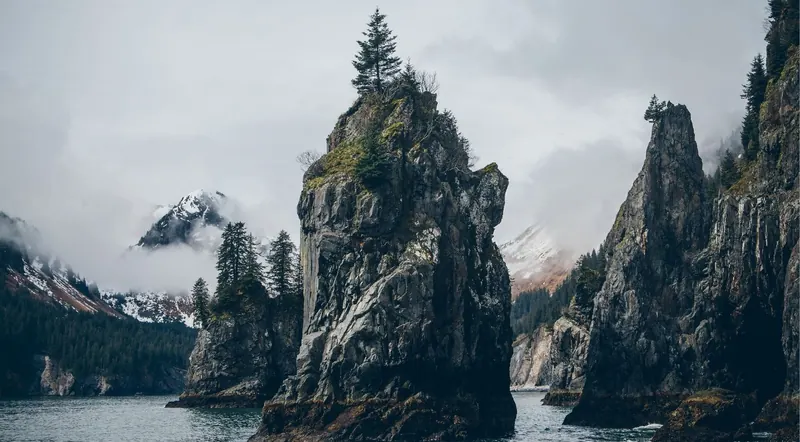
Sea kayaking is the most intimate way to experience Kenai Fjords National Park, and for most visitors the right choice comes down to three places: Resurrection Bay for a beginner-friendly half or full day close to Seward; Aialik Bay for a full-day glacier-front paddle reached by wildlife boat; and Bear Glacier Lagoon for the marquee experience of paddling among building-sized icebergs, reached only by jet-boat water taxi or helicopter. All three are run by private, professional guide companies — not the National Park Service — and all three are genuinely doable for first-timers when you go with a guide. This guide explains each destination, the trip types, the operators, and exactly how to choose and book.
If you want the widest possible view of the park’s big tidewater glaciers and whales, a boat tour or cruise still covers far more ground than any paddle — and many visitors happily do both. More on that comparison below.
One honest note on the trip in the date picker below, the Tonsina Point paddle and Exit Glacier walk. It is the combination we would start a first-timer on, and its rating slipped to 4.0 out of 5 when we re-checked the listing on September 25, 2026, on a sample of only seven reviews. That is a thin sample and a real drop, so read the most recent reviews before you book, and treat the guided-kayak options further down this page as genuine alternatives.
Quick comparison: where to kayak near Seward
| Destination | How you get there | Difficulty | Highlight | Typical trip length | Best for |
|---|---|---|---|---|---|
| Resurrection Bay (Lowell Point) | Short van ride from Seward, launch from the beach | Easy–moderate | Sheltered coves, sea otters, eagles, rainforest waterfalls | Half day (≈4 hrs) to full day | First-timers, families, limited time |
| Caines Head / Fox Island | Paddle and/or water taxi within Resurrection Bay | Moderate–active | WWII fort, sea cliffs, wildlife | Full day | Active paddlers wanting more distance |
| Aialik Bay | Wildlife boat / water taxi (~2–2.5 hrs) + paddle | Moderate (committing) | Aialik & Holgate tidewater glaciers, Pedersen Lagoon, calving | Full day; 2+ day camping | Confident beginners wanting a glacier |
| Bear Glacier Lagoon | Jet-boat water taxi (~45 min) or helicopter only | Easy once there (unique hazards) | Giant icebergs in a calm lagoon | Half/full day (~5 hrs); overnight | Iceberg bucket-listers, photographers |
| Northwestern Fjord | Long water taxi (multi-hour) | Advanced/committing | Multiple remote tidewater glaciers | Multi-day expedition | Experienced paddlers, solitude seekers |
Other experiences you might enjoy
Many paddlers pair a Bear Glacier or Aialik Bay trip with helicopter flightseeing over the Harding Icefield or a full-day glacier and wildlife cruise. Current options are below.
Kayaking Resurrection Bay: the easy, beautiful starting point
Resurrection Bay is the large, relatively sheltered fjord that Seward sits on, and it’s where the great majority of Seward kayak trips begin. Most guided day tours launch from a beach at Lowell Point, a few minutes’ drive south of town, so you’re on calm, protected water within minutes of gearing up. This is the place to paddle if you’ve never sat in a sea kayak, if you’re traveling with kids, or if you only have half a day.
Half-day tours typically run about four hours of activity and hug the shoreline of the bay and the adjacent Caines Head State Recreation Area, with time to poke into coves and watch for wildlife. Longer options add a walk into the temperate rainforest to a hidden waterfall, or a full day at Tonsina Point, where you paddle a few miles of coast, land to beachcomb, and enjoy a picnic lunch. Common sightings include sea otters rafting at eye level, harbor seals, bald eagles, Steller sea lions, seabirds, and — in August — salmon running up the creeks. Our wildlife guide covers the full cast, from otters to puffins to mountain goats. Whales are sometimes seen in the bay but are more reliably viewed on a longer cruise.
For fitter, more adventurous paddlers, the Caines Head trip combines a substantial paddle with a hike to Fort McGilvray, a World War II coastal-defense remnant. Some operators run this as roughly ten miles of paddling plus a five-mile hike — a big, rewarding day best suited to people comfortable with sustained effort. Fox Island, farther out in the bay, is a popular point-to-point paddle usually paired with a wildlife catamaran cruise.
Kayaking Aialik Bay: a full-day glacier paddle
Aialik Bay is where you graduate from “scenic bay” to “national-park glacier country.” You can’t sensibly paddle here from Seward under your own power — the route rounds exposed capes on the open Gulf of Alaska — so these trips begin with a wildlife boat or water taxi ride of roughly two to two-and-a-half hours, which doubles as a wildlife cruise. On the way out and back it’s normal to see puffins, sea otters, harbor seals, Steller sea lions, Dall’s porpoise, and often humpback or killer whales. You’re then dropped at a beach for three to three-and-a-half hours of paddling near a tidewater glacier.
The scenery is the payoff: Aialik Glacier and nearby Holgate Glacier calve ice into the bay with cracks and booms that carry across the water, and you paddle among floating bergy bits at true sea level while keeping a safe distance from the face. Many trips also visit Pedersen Lagoon, a shallow, wildlife-rich lagoon backed by Pedersen Glacier that can only be entered near high slack tide; harbor seals haul out on ice floes here, and black bears are sometimes spotted on shore. Guided Aialik day trips are marketed as appropriate for beginners, but they are a more committing, weather-exposed, physically active day than a Resurrection Bay paddle, and most operators set a minimum age around 12. If you want to go deeper, multi-day camping trips base out of Aialik Bay and reach Holgate Arm and Pedersen over two or more days.
Bear Glacier Lagoon: the iceberg paddle you’ve seen in photos
Bear Glacier Lagoon is the signature Seward kayaking experience and the one most people picture when they imagine glacier kayaking in Alaska — see our Kenai Fjords glaciers guide for the full picture of the park’s ice. Bear Glacier is the largest of the at-least-38 glaciers flowing from the Harding Icefield and the largest glacier in Kenai Fjords National Park, descending roughly 12 miles from its origin. (Source lengths vary: some sources, citing the NPS, give roughly 12 miles from origin, while others cite up to roughly 17 miles — treat the exact figure as approximate.) Unlike the park’s ocean-fronting tidewater glaciers, it ends in a proglacial lagoon — a lake trapped between the glacier and its terminal moraine — about 12 miles southwest of Seward. That lagoon is calm, shielded from ocean swell, and packed with icebergs, many of them far larger than the ice near the park’s tidewater glaciers; some are the size of small buildings.
The only ways in are by water taxi or helicopter. Guided day trips use a specialized jet boat that runs down Resurrection Bay and up a shallow, glacier-fed river channel at high tide, a ride of roughly 45 minutes each way. From there it’s a short carry over the moraine into the sheltered lagoon. Helicopter access — the “heli-kayak” — flies in over the Chugach peaks and the icefield and offers more scheduling flexibility and less chance of weather delay, at a premium price. Once you’re actually on the lagoon, the paddling itself is relatively gentle and well within reach of newer paddlers, which is a big part of Bear Glacier’s appeal: extraordinary scenery without extraordinary skill requirements.
That said, the lagoon has genuine, unusual hazards. The National Park Service warns that the icebergs are mostly submerged and “can roll and break at any moment,” that calving can send large waves across the water, and that the area is subject to glacial lake outburst floods (GLOFs) — sudden releases from an ice-dammed lake upstream. Per the NPS, “In October 2010, a glacial lake outburst flood was documented by equipment that recorded a 1.8 meter (5.9 foot) rise in water levels in Bear Glacier Lagoon. In August 2014, an outburst flood event caused Bear Glacier Lagoon to breach the moraine that separates it from Resurrection Bay.” Katabatic winds can also pour off the glacier without much warning. This is exactly why the NPS recommends local guides who “understand how to read the ice, the weather, and the landscape as it shifts.”
Iceberg density changes through the season, and it’s a real trade-off. Early in summer the lagoon can be so packed with ice that navigating gets difficult; later in the season the ice thins out, making paddling easier but sometimes less dramatic. For overnighters, several operators offer beach camping, and there are comfort-oriented “glamping” yurt stays on the lagoon reached by helicopter, with guided paddling included.
Northwestern Fjord and remote multi-day expeditions
For experienced paddlers — or beginners willing to commit to a guided expedition — Northwestern Fjord is the park’s remote crown jewel, with several tidewater glaciers clustered in sheltered water and very few other visitors. It sits farther west than Aialik and requires a long water-taxi transit; one operator’s round-trip boat ride runs about 6.5 hours, which is why Northwestern is almost always a multi-day rather than a day trip. Multi-day camping trips in Aialik Bay and Northwestern Fjord typically run three to six days, with guides providing all kayaking and camping gear, meals, and charter transportation. These are the trips for travelers who want to fall asleep to calving ice and wake up to kittiwakes. Read more about the park’s ice in our glaciers guide and the remote cruise option in our Northwestern Fjord cruise guide.
Trip types explained
- Guided half-day (Resurrection Bay): ~4 hours activity, launch from Lowell Point, easiest and cheapest, great for first-timers and kids.
- Guided full-day (Resurrection Bay / Fox Island / Caines Head): more distance, picnic lunch, often a hike; a satisfying day without leaving the bay.
- Kayak + wildlife-cruise or water-taxi combos (Aialik / Northwestern): the boat ride out is itself a wildlife tour, then you paddle a glacier. These “combination” trips bundle transport, guiding, and paddling into one full day and are among the highest-value bookings in Seward.
- Jet-boat + kayak (Bear Glacier): ~45-minute jet boat each way plus roughly two-plus hours paddling among icebergs; total day around five hours.
- Heli-kayak (Bear Glacier): helicopter in and/or out for flightseeing plus lagoon paddling — top-tier pricing, maximum wow, most weather resilience.
- Multi-day expeditions (Aialik / Northwestern): 3–6 day camping trips, all gear and meals provided.
- Glamping / base camp (Bear Glacier): overnight in a heated yurt or established camp with guided paddling included.
- Stand-up paddleboarding (SUP): offered at Bear Glacier and on calmer lakes; SUP generally requires a bit more balance and confidence than a tandem kayak, and some SUP-specific glacier trips set a higher minimum age.
The operators
All the companies below are private outfitters operating under National Park Service commercial-use authorizations or as water-taxi services. Offerings change season to season, so verify current status before booking.
Sunny Cove Sea Kayaking (sunnycove.com) is the longest-running kayak company in Seward, on the water since 1996, and is — in its own words — “woman-owned and led by local professional guides since 1996.” Owner Stephanie Millane took over the company in 2019. It has its own launch beach at Lowell Point and a base on Fox Island, and runs Resurrection Bay half-day, waterfall, and full-day Tonsina Point tours (ages 8+), a more strenuous private Caines Head kayak-and-hike (ages 12+), a Kenai Fjords glacier kayak combo aboard its own catamaran, Fox Island cruise-and-kayak combos, and 3–6 day camping trips in Aialik Bay and Northwestern Fjord. Gear provided includes stable two-person kayaks, PFD, spray skirt, neoprene mitts, waterproof boots, and a dry bag. Through its “Paddle for a Purpose” program it donates $1 per seat to the Seward Community Foundation and reports having “donated more than $20,000 to local non-profits since we started this program.”
Kayak Adventures Worldwide (kayakak.com) is a family-owned company that has guided in Seward for over 15 years, emphasizing small groups and environmental stewardship (a member of 1% for the Planet, with more than $100,000 donated). It runs a Resurrection Bay half-day, a popular Aialik Glacier & Wildlife day trip (2.5-hour water-taxi wildlife ride plus 3–3.5 hours paddling), Fox Island and Caines Head full-day trips, cabin-based multi-day trips at Granite Point, remote camping trips in Aialik Bay and Northwestern Fjord, and an Aialik overnight. It offers private family tours for kids ages 6–13 at no added cost.
Liquid Adventures (liquid-adventures.com), established in 2005, is the best-known Bear Glacier specialist. Its Bear Glacier iceberg kayaking runs a 30–45-minute jet-boat ride plus lagoon paddling (a day of a little over five hours), with heli-in/heli-out upgrades, dedicated SUP versions, a half-day Tonsina Creek rainforest paddle, Aialik Bay trips, and a two-day Bear Glacier overnight camping trip. Dry suits are provided on cold-water trips; tandem sit-on-top kayaks and a maximum of six guests to a guide keep the lagoon quiet. Note the company’s stated dry-suit size limit (roughly up to about 6'6"/260 lb).
Miller’s Landing (millerslandingak.com) is a family-run business operating from the original homestead on Lowell Point since 1982, with its own water-taxi fleet — handy because your shuttle leaves right from the beach rather than a downtown office. It offers guided kayaking from gentle half-days to multi-day backcountry expeditions, Caines Head kayak-and-water-taxi trips, Aialik/Northwestern day and overnight trips, and flat-water Bear Lake paddles for families. Guides complete a two-week training including ACA Level 2 skills, cold-water rescue, and a required Wilderness First Responder certification. Single and double kayaks are available.
Adventure Sixty North (adventure60.com), operating since 2005, runs a walk-in-friendly outdoor center on Herman Leirer Road. Its most popular trip is the beginner-friendly Tonsina Point paddle (1:6 guide ratio), and it also offers a three-quarter-day Resurrection Bay option, Bear Glacier heli-kayak and camping trips, Aialik Bay, a fully guided multi-day Northwestern Glacier trip, and flat-water Bear Lake paddling for families with small children. Guided kayaking runs May through mid-September, with some weather-dependent winter tours.
Seward Ocean Excursions (sewardoceanexcursions.com), established in 2016, is a family-run, year-round, boat-based operator running small trips (no more than six guests) aboard its “Lynx” vessels; it functions primarily as a wildlife-cruise and water-taxi service that can shuttle kayakers, rather than a large guided-paddling outfit. Alaskan Coastal Safari / Seward Water Taxi and the Bear Glacier Glamping Camp operation (alaskakayak.com) round out the water-taxi and Bear Glacier options.
Do you need experience? Who can do it
For introductory and day trips, no prior kayaking experience is required — guides handle navigation, route-finding, safety, and instruction, and give a paddling orientation before you launch. Most day trips use stable tandem (two-person) kayaks, which are forgiving and let a stronger and weaker paddler share a boat. Reasonable fitness helps: you should be comfortable sitting in a kayak for a few hours and walking short distances over uneven ground. On the Aialik and Bear Glacier combos you’ll paddle for several hours, sometimes in cold and rain, so a baseline of stamina matters more than technique.
Age minimums vary by trip and operator. Some Resurrection Bay tours accept kids as young as 8; several companies run private family trips for ages 6–13; more committing glacier day trips commonly set the minimum at 12; and some SUP-specific glacier trips require paddlers to be older (one operator sets 16 for a Bear Glacier SUP that requires swimming ability). Height and weight limits also apply because of dry-suit sizing. Prior experience genuinely matters for independent paddling in Aialik Bay, Northwestern Fjord, or any exposed open water — these are not beginner waters without a guide.
What you’ll see and feel
The case for kayaking over a motorboat is immersion. At water level you’re eye-to-eye with sea otters cracking shellfish on their bellies, close to harbor seals that surface to study you, and beneath bald eagles and rafts of seabirds, with Steller sea lions and, at a distance, whales. Onshore you may spot black bears foraging. Near the ice you experience calving from a safe distance — the crack, the collapse, the wave rolling under your hull — and in Pedersen and Bear Glacier lagoons you drift among sculpted, impossibly blue ice with only the sound of trickling meltwater. It’s quiet, active, and profoundly different from the deck of a tour boat.
Safety: cold water, ice, wind, and why guided is the smart call
Kenai Fjords is beautiful and genuinely demanding, and the NPS is blunt that outside sheltered Resurrection Bay “these waters are not for beginners.” Key hazards and the standard mitigations:
- Cold water and hypothermia. Resurrection Bay water peaks around 55°F (13°C) in August and is far colder earlier; immersion is dangerous. Guides provide dry suits on glacier trips and require PFDs at all times.
- Icebergs. Stay well back — the NPS guidance is to remain twice an iceberg’s height or width away, never paddle between two large bergs, and keep at least a half mile from a glacier’s face. Bergs can roll or break without warning.
- Calving waves and GLOFs. Calving can throw large waves; guides land and camp at least two miles from glacier faces and watch for sudden water-level changes that can signal a glacial lake outburst flood.
- Katabatic winds and weather. Winds off the ice and Gulf swells build fast; afternoon breezes kick up surf on landing beaches. Trips are regularly delayed or canceled for weather — build flexibility into your schedule.
- Tides and currents. Tidal range can reach 15 feet; lagoons like Pedersen, Northwestern, and Bear should be entered only near high slack tide.
- The Aialik Cape crossing. Do not attempt to paddle from Resurrection Bay around the exposed capes to the outer fjords under your own power — access the outer fjords by water taxi, cruise, or plane.
- Communication. Cell coverage is poor; guides carry marine VHF radios (Channel 16/72).
- Wildlife distances. All marine mammals are protected under the Marine Mammal Protection Act; the general rule is to stay at least 100 yards away. In glacial fjords, NOAA Fisheries asks that all vessels “(kayaks to cruise ships) should strive to maintain 500 yards (about 0.25 miles) from seals” hauled out on ice, “avoid traveling through waters with greater than 50 percent ice cover,” make no wake, and favor early-morning and evening visits — because, per NOAA, “seals approached by vessels at 100 m (about 100 yds.) can be 25 times more likely to flush from the ice than seals at 500 m,” and flushing endangers pups. Guides know and follow these rules, and practice Leave No Trace.
To be clear on one point: the guides who lead these trips are private professional guides, not National Park Service rangers. As the NPS states, “Kenai Fjords National Park does not provide boat tours or use concessionares [sic],” and its boat-tours page (updated September 12, 2025) confirms it does not have park rangers on boat tours. If you want a self-guided trip, review the NPS kayak-safety and backcountry pages carefully and consider your skills honestly.
Gear and what to wear
Guided operators supply the hard gear: kayak, paddle, spray skirt, U.S. Coast Guard–approved PFD, and — on cold-water and glacier trips — a dry suit, plus neoprene mitts, waterproof/rubber boots, and a dry bag; Resurrection Bay day trips may use splash gear rather than full dry suits. Because guides launch and land the boats from the beach, you generally won’t have to wade, but your feet and lower legs can still get wet, so wear shoes you don’t mind soaking.
What to bring and wear:
- Synthetic or wool base and mid layers — no cotton (cotton kills warmth when wet).
- Warm hat and light gloves.
- Sunglasses and sunscreen (glare off water and ice is strong).
- A brimmed hat and rain layers.
- Water and any snacks you want beyond what’s provided.
- A waterproof camera or phone case — several Bear Glacier trips include a waterproof phone case and dry bag.
Our guide to what to expect on a Kenai Fjords cruise covers layering and packing in more detail.
Season and timing
The Seward kayak season runs roughly May through September. Sunny Cove’s 2026 Resurrection Bay season runs May 17–September 7; Adventure Sixty North guides May through mid-September; and Bear Glacier trips generally begin around June 1 once the river channel and ice allow. June through August offer the warmest, longest days — Seward’s near-midnight-sun daylight makes long paddles and early departures easy. Water is cold all season (warmest ~55°F/13°C in August), which is why dry suits matter. At Bear Glacier, expect the lagoon to be most densely packed with ice early in summer (spectacular but harder to navigate) and progressively more open later. Weather cancellations are a normal part of Alaska kayaking; the exposed glacier trips are the most weather-sensitive, so don’t schedule them for your only day in town. See our best time to visit guide for the season overview.
Kayaking vs. a boat cruise: an honest comparison
These are complementary, not competing, experiences.
Choose kayaking if you want immersion, quiet, water-level wildlife encounters, and physical activity, and you’re comfortable with a limited range and real weather exposure. Kayaking gets you closer to otters, seals, and lagoon ice than any big boat can.
Choose a boat cruise if you want to cover distance and see the park’s biggest ocean-fronting tidewater glaciers, maximize your chances of whales, stay warm and dry, and avoid physical exertion. A full-day cruise reaches glaciers — and wildlife farther offshore — that a kayak simply can’t. Cruises are also more weather-resilient and don’t require any skill or fitness, which makes them the better pick if you’re prone to being cold, or if you’re coming on a tight Anchorage day trip. Our operators compared guide covers who sails what, and our packing guide covers what to wear on deck. (If you’re worried about motion, see our cruise seasickness guide.)
The best answer for many visitors staying two or more days is both: a cruise to the outer fjords for range and glaciers, plus a kayak day for intimacy — or a single combination trip that does both in one outing. If you’re weighing Kenai Fjords against other regions, our Kenai Fjords vs. Glacier Bay comparison helps.
Practical booking
- Book ahead in peak season. Small-group kayak trips and Bear Glacier departures sell out, and marquee trips fill days to weeks in advance in July and August; the Bear Glacier heli-kayak has limited helicopter seats.
- What’s included typically: professional guides, all kayak and safety gear, dry suits on glacier trips, and — on full-day and combo trips — lunch or snacks and the water-taxi/boat transport. Confirm meals and transport when booking.
- Meeting points: most operators meet at a downtown Seward office or the Small Boat Harbor and shuttle you to Lowell Point; Miller’s Landing meets at its Lowell Point homestead. Bear Glacier and Aialik trips depart from the harbor.
- Door-to-door time: budget about half a day for a Resurrection Bay half-day, a full day for Aialik or Bear Glacier, and multiple days for expeditions.
- Physical prep: none needed for intro trips beyond being comfortable in a seat for a few hours; the glacier combos reward light general fitness.
- Will beginners regret it? Overwhelmingly no — first-timers routinely rate a guided Seward kayak trip as a highlight of their Alaska visit.
- Pair it with your stay. Combine a paddle with a night or two in town using our where to stay in Seward guide.
For the big picture of the park, start with our complete visitor guide.
Ready to paddle? Book a guided Resurrection Bay tour for an easy introduction, an Aialik Bay combo for a glacier day, or the Bear Glacier iceberg trip for the paddle of a lifetime — and add a wildlife cruise if you want to see it all.
Frequently asked questions
Do you need experience to kayak in Kenai Fjords? No — for guided intro and day trips, no prior experience is needed. Guides provide instruction and handle navigation and safety. Experience only becomes essential if you paddle independently in exposed waters like Aialik Bay or Northwestern Fjord.
Is kayaking in Seward safe? Yes, with a reputable guided operator. The main risks — cold water, calving ice, wind, and tides — are well managed by trained guides who provide dry suits and PFDs and follow NPS and NOAA guidelines. Independent paddling in the outer fjords is another matter and is not for beginners.
Can beginners kayak to a glacier? Yes. Guided day trips to Aialik Bay and Bear Glacier Lagoon are designed for beginners, though they’re longer and more weather-exposed than a Resurrection Bay paddle. Bear Glacier’s lagoon is calm and especially beginner-friendly once you’re there.
How do you get to Bear Glacier Lagoon? Only by water taxi or helicopter — there are no roads. A specialized jet boat runs about 45 minutes each way from Seward up a shallow glacial river; the helicopter option flies in over the icefield with more schedule flexibility. You cannot safely paddle there from Seward.
What should I wear kayaking? Synthetic or wool layers (never cotton), a warm hat, light gloves, sunglasses, and sunscreen. Guides provide dry suits on glacier trips and PFDs on all trips. Wear shoes you don’t mind getting wet.
Will I see wildlife from a kayak? Very likely — sea otters, harbor seals, bald eagles, seabirds, and often Steller sea lions. Whales are seen more often from the boat portion of combo trips than from the kayak itself. Black bears are sometimes visible onshore in the fjords.
Is it cold? The air is cool and often damp, and the water is cold year-round (warmest around 55°F/13°C in August). Dressed properly in the layers and dry suit provided, most paddlers stay comfortable.
How long are the tours? Resurrection Bay half-days run about four hours of activity; full-day and Bear Glacier trips run roughly five to eight hours door to door; Aialik combos are a full day; multi-day expeditions run three to six days.
Kayaking or a boat tour — which is better? Neither is “better.” Kayaking is immersive, quiet, and active but limited in range; a boat cruise covers far more distance, reaches the biggest tidewater glaciers, is best for whales, and stays warm and dry. Many visitors do both, or a combination trip.
Can kids kayak? Yes. Some Resurrection Bay tours take kids as young as 8, and several operators run private family trips for ages 6–13. Glacier day trips usually set the minimum around 12, and some SUP trips require paddlers to be older.
When is the best time to kayak? June through August for the warmest weather and longest daylight. Bear Glacier’s icebergs are densest early in summer and thin out later, so early season is more dramatic but harder to navigate.
Do I need a wetsuit? You don’t need to bring one. Guides provide dry suits on cold-water glacier trips and splash gear on sheltered Resurrection Bay trips; a dry suit is the recommended cold-water safety layer.
See a Glacier Calve Into the Sea
The most-booked cruise in Kenai Fjords National Park — more than 940 guests, 4.8 out of 5. A tidewater glacier, a deli lunch on board, and free cancellation up to 24 hours before you sail.
Check Availability & Book