Glaciers of Kenai Fjords: Aialik, Bear, Exit & More
The complete guide to Kenai Fjords glaciers — Aialik, Holgate, Bear, Exit and Northwestern. How to see each by boat, road, kayak or air, plus retreat data.
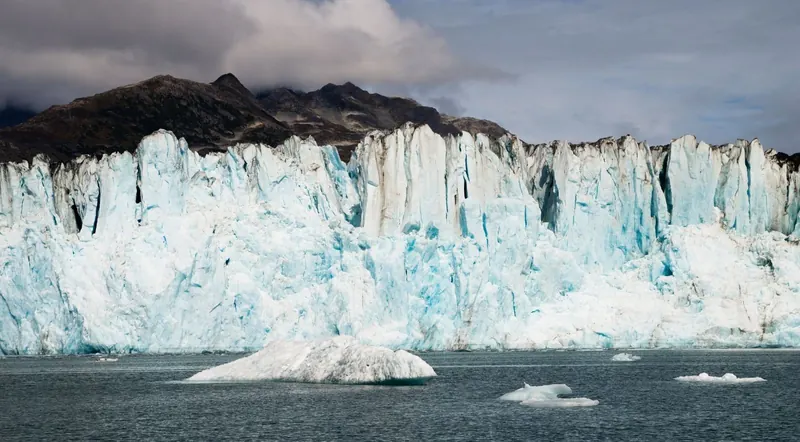
Kenai Fjords National Park exists for one reason: ice. Nearly half the park sits beneath the Harding Icefield, a single sheet of ancient ice that feeds at least 38 glaciers spilling toward the sea. There are three distinct ways to reach them — by road (just one glacier), by boat cruise out of Seward (the tidewater giants), and by kayak or helicopter (the remote iceberg lagoons).
This guide covers what these glaciers are, how they differ, which ones you can actually see, and how to get to each. For the bigger picture, start with our complete Kenai Fjords National Park guide and our breakdown of which boat tour to book.
Kenai Fjords glaciers at a glance
| Glacier | Type | How to see it | Distinctive feature |
|---|---|---|---|
| Exit | Land-terminating valley | Road + hiking (only drive-up glacier) | Year-marker signs tracing its retreat |
| Aialik | Tidewater | 6-, 7.5-hour cruise; kayak | Largest, most active calving face |
| Holgate | Tidewater | 6-, 7.5-hour cruise; kayak | Taller face; one of the few advancing |
| Bear | Lake/lagoon-terminating | Water taxi/helicopter + kayak | Park’s largest; iceberg-choked lagoon |
| Northwestern | Tidewater | 8.5-hour Northwestern Fjord cruise | Dramatic century of retreat |
| Pedersen | Lake/lagoon-terminating | Longer cruises; lodge; kayak | Wildlife-rich lagoon |
Cruise itineraries vary by operator, weather, and ice conditions — verify before booking.
Other experiences you might enjoy
Beyond the classic glacier cruise, travelers add helicopter flightseeing to Bear Glacier Lagoon, sea kayaking in Aialik Bay, or a guided hike at Exit Glacier. Current options are below.
The Harding Icefield: the source of everything
Nearly every glacier, fjord, and wildlife encounter in this park traces back to one feature: the Harding Icefield. It spans roughly 700 square miles of the Kenai Mountains, reaches depths of up to 4,000 feet, and receives more than 400 inches of snow a year — the largest icefield contained entirely within the United States. Poking above the ice are dark rock summits called nunataks, the tops of mountains completely buried by the ice sheet.
At least 38 glaciers flow outward from the icefield, and 12 terminate within park boundaries. The icefield is shrinking overall, though the high, top-heavy plateau still retains its winter snow year to year — the losses are concentrated at lower elevations.
Glacier types explained
Not all glaciers are alike, and the differences determine what you’ll see. Tidewater glaciers — Aialik, Holgate, and Northwestern — flow all the way to the sea and calve icebergs directly into salt water; these are the main attraction on a glacier cruise. Valley (alpine) glaciers like Exit Glacier flow down mountain valleys like rivers of ice. Lake- or lagoon-terminating glaciers, such as Bear and Pedersen, end in a freshwater lake or lagoon rather than the open ocean, and their calved ice fills protected lagoons.
Why tidewater glaciers behave differently. Land-terminating glaciers respond fairly directly to climate — warmer air melts them back. Tidewater glaciers follow their own script called the tidewater glacier cycle: because their fronts float in deep water, advance and retreat is governed as much by the shape of the seafloor as by temperature. That’s why one tidewater glacier can be advancing while its neighbor retreats — Holgate advanced in recent years even as most other glaciers shrank, a textbook illustration.
Why glacier ice looks blue. As snow is buried and compressed over centuries, air bubbles are squeezed out and the ice forms dense crystals. Per the USGS, ice absorbs the red (long-wavelength) part of white light while transmitting and scattering the blue (short-wavelength) light — the longer the path light travels through the ice, the bluer it appears. Freshly calved and cracked faces show the most intense blue.
Individual glacier profiles
Exit Glacier — the one you can drive to
Exit Glacier is the only road-accessible glacier in Kenai Fjords, reached via Herman Leirer Road off the Seward Highway. The wheelchair-accessible Glacier View Loop (about a mile) reaches an outwash-plain viewpoint, while the strenuous Harding Icefield Trail climbs about 8.2 miles round trip with roughly 3,000 feet of elevation gain to a sweeping overlook of the icefield. Its famous year-marker signs trace where the glacier’s toe stood in past years — a walk toward the ice is literally a walk through decades of retreat. Per NPS research, the glacier retreated about 2.5 km along its centerline from its 1815 maximum to 2015, with the retreat rate accelerating in recent years.
Guided hikes reach both trails — see the Exit Glacier nature hike for the easy walk or the Harding Icefield Trail hiking tour for the full climb.
Aialik Glacier — the star of the cruises
Aialik is the largest and most actively calving tidewater glacier in the park, about a mile wide and 300–400 feet tall, and the primary destination for full-day cruises. Because its accumulation area far exceeds its melt zone, it recedes far more slowly than its neighbors — one of the more stable tidewater termini in the park. Harbor seals haul out on the ice floes at its face, especially during pupping season.
Holgate Glacier — the outlier that’s advancing
Holgate sits in the narrower Holgate Arm of Aialik Bay — about half as wide as Aialik but taller, with a face up to roughly 500 feet above sea level. A 2022 University of Washington–NPS study found it was the only tidewater glacier in the park to substantially gain both length and area since 1984, advancing through cycles even as most of the park’s glaciers retreat. Because the arm is compact and often packed with ice, cruises frequently make their closest, most dramatic glacier approach here.
Bear Glacier — the park’s largest, and its iceberg lagoon
Bear Glacier is the largest in Kenai Fjords, stretching about 12 miles from the Harding Icefield, and it’s a lake/lagoon-terminating glacier: it ends in Bear Glacier Lagoon, held back by a terminal moraine, famous for enormous icebergs — some the size of small buildings. It retreated more than 5 km between 1984 and 2021, among the fastest-retreating glaciers the 2022 study measured. You can’t reach the lagoon on a standard boat cruise — instead, guided outfitters run it by helicopter or water taxi. See the Bear Glacier Flight and Beach Landing or the Bear Glacier Signature Helicopter Tour.
Northwestern Glacier — a century of dramatic retreat
Northwestern Glacier lies at the head of the remote Northwestern Fjord. As recently as around 1900 it filled the entire fjord; today its tidewater terminus has retreated roughly 9.5 miles from that position, revealing a fjord dotted with islands that were buried under ice a century ago. Reaching it requires the longest cruise in the park, and ice flows can make the narrow fjord difficult to enter early in the season — see the Northwestern Fjord cruise.
Pedersen Glacier — the wildlife lagoon
Pedersen Glacier descends through a pair of icefalls to a lagoon on the western shore of Aialik Bay. It’s another fast-retreating lake-terminating glacier, pulling back about 3.2 km from 1984 to 2021 as it exposed Pedersen Spit and the surrounding wildlife sanctuary — a rich habitat destination for kayakers.
The 2022 retreat study: what the data show
The most authoritative recent picture comes from a University of Washington–NPS study published in the Journal of Glaciology in August 2022. Using satellite imagery from 1984 to 2021, researchers mapped 19 glaciers: 13 substantially retreated, four were relatively stable, and two advanced. Collectively, the lower reaches of these glaciers lost about 42 square kilometers of ice. Lake-terminating glaciers retreated fastest — Bear and Pedersen led the losses — while tidewater termini were relatively stable overall, with Holgate the standout advance. The practical takeaway for visitors: the viewscape is changing measurably year to year.
How to see each glacier
By boat cruise from Seward — see our boat tours guide for every option:
- A 4-hour Resurrection Bay cruise reaches no tidewater glacier — you may see Bear Glacier only in the distance.
- A 6-hour cruise is the shortest that reaches a tidewater glacier, typically either Aialik or Holgate.
- A 7.5-hour cruise reaches both Aialik and Holgate, doubling your chances of seeing active calving.
- The 8.5-hour Northwestern Fjord cruise travels deepest into the park, on smaller vessels.
By road: Exit Glacier only, via Herman Leirer Road.
By kayak: Guided sea-kayak trips reach Aialik Bay, Pedersen Lagoon, and Bear Glacier Lagoon — see the glacial lake kayaking tour or the kayak and Exit Glacier hike combo.
By helicopter/flightseeing: Scenic flights cross the Harding Icefield, and some include glacier landings — see the Glaciers & Fjords Helicopter Tour with 2 Landings.
If you’re planning the trip from the city, our Anchorage day trip guide covers the logistics, and the Seward travel guide covers the town.
The calving experience: “white thunder”
Watching a tidewater glacier calve is the highlight of any cruise. A tower of ice shears from the face and crashes into the sea, throwing up spray and a wave that spreads across the bay. Because sound travels slower than light, you often see the ice fall a beat before you hear the crack and boom — the reason it’s long been nicknamed “white thunder.” Local operators report that May and June are the most active calving months, driven by the warming spring sun, though calving is never guaranteed. Boats keep a respectful distance and idle at the face so passengers on both sides get a view; the best spot is out on deck, dressed warmly, since wind off the ice makes glacier faces bitterly cold even on sunny days.
Safety and responsible viewing
Glaciers are beautiful and genuinely dangerous. Boats stay back from glacier faces because of calving waves and submerged ice that can surface violently — trust your captain’s positioning. Don’t walk on a glacier unguided; crevasses can hide under snow bridges, and any ice walking should be with a licensed guide who provides ropes, crampons, and helmets. Responsible operators also give harbor seals hauled out on ice a wide, respectful berth. Remember there are no NPS rangers stationed aboard the tour boats — narration comes from the operators’ own captains and crew.
Best time to see the glaciers
The full-day cruises that reach the park’s tidewater glaciers run from early May to late September, with the widest schedule in June, July, and August; shorter Resurrection Bay cruises run from March to October but do not reach a tidewater glacier. No official source dates a calving peak for these glaciers, so treat calving as possible on any visit. Northwestern Fjord can be blocked by ice early in the season, and Bear Glacier Lagoon is most packed with icebergs in early summer, gradually clearing through August and September. For deeper seasonal planning, see our best time to visit guide.
Frequently asked questions
Can you drive to a glacier in Kenai Fjords? Yes — Exit Glacier is the only road-accessible glacier in the park, about 8.4 miles up Herman Leirer Road from the Seward Highway. A short, partly paved trail brings you close to the ice, and the strenuous Harding Icefield Trail climbs above it for a view of the full icefield.
See a Glacier Calve Into the Sea
The most-booked cruise in Kenai Fjords National Park — more than 940 guests, 4.8 out of 5. A tidewater glacier, a deli lunch on board, and free cancellation up to 24 hours before you sail.
Check Availability & Book