Seasickness on a Kenai Fjords Cruise: How to Avoid It
Worried about seasickness on a Kenai Fjords cruise? The rough part is one short open-water crossing. Here's how to prevent it and pick the calmest cruise.
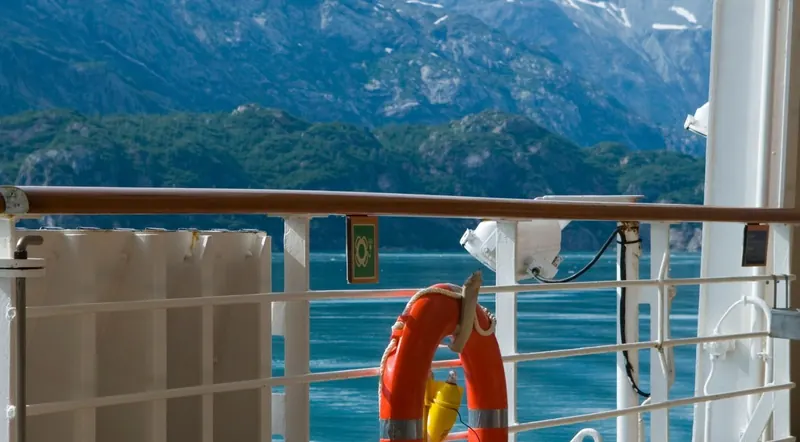
Here’s the honest answer up front: most people do not get seasick on a Kenai Fjords cruise, and the part that causes trouble is a single, time-limited open-water crossing — not the whole day. The waters right out of Seward, in Resurrection Bay, are usually calm. It’s when the boat rounds Aialik Cape and dips into the open Gulf of Alaska that you meet ocean swell, and that stretch typically lasts only about 25–60 minutes each way. Choose the right cruise, take a simple precaution before you board, and the odds are strongly in your favour. And if you’re genuinely very prone to motion sickness, there’s a clean solution: take the sheltered Resurrection Bay half-day cruise, which mostly avoids the rough water altogether.
Fear of getting sick stops a lot of people booking one of the best days out in Alaska. It shouldn’t. This guide explains exactly where and why the motion happens, how to pick the calmest cruise for your tolerance, which remedies actually have evidence behind them, and what to do if you start feeling queasy on the water.
A note on medical information: This article is general travel information, not medical advice. Medications and remedies affect people differently. Talk to a doctor or pharmacist before taking any medication — especially if you are pregnant or breastfeeding, giving it to a child, elderly, taking other medicines, or have a health condition such as glaucoma. See the full disclaimer at the end.
Quick answer: which cruise if you’re prone to seasickness?
| Cruise type | Open-water (Gulf) exposure | Seasickness risk | Best for |
|---|---|---|---|
| Resurrection Bay half-day (≈4–5 hr) | Minimal — stays in the protected bay | Lowest | Very prone travellers, young kids, anyone nervous |
| 6-hour Aialik Bay national park cruise | One crossing around Aialik Cape (~25–60 min each way) | Moderate, and manageable | Most visitors who want tidewater glaciers |
| 7.5-hour national park cruise | Same crossing, more time at glaciers | Moderate | Glacier enthusiasts |
| 8.5-hour Northwestern Fjord cruise | The most open-water time of any cruise, smaller vessel | Highest | Hardy travellers, keen wildlife photographers |
The single most effective thing you can do is match the cruise to your tolerance. Everything else — medication, ginger, wristbands, where you stand — stacks on top of that choice.
Other experiences you might enjoy
If a rolling boat worries you, helicopter flightseeing over the Harding Icefield, guided sea kayaking in sheltered Resurrection Bay, and a hike at Exit Glacier all avoid open water. Current options:
Why Kenai Fjords cruises can cause seasickness
The geography of this trip is the whole story. Every full-day cruise from Seward follows roughly the same shape: out through Resurrection Bay, which is long, deep and ringed by mountains that shelter it from the open ocean, and then around Aialik Cape into the Gulf of Alaska before ducking back into a protected fjord (Aialik Bay or, on the longest trip, Northwestern Fjord) to reach the tidewater glaciers.
Resurrection Bay is usually calm. Aialik Bay and the inner fjords, once you’re inside them, are calm too — often glassy. The rough bit is the transition: the open-Gulf stretch as the boat rounds the cape, where there’s nothing between you and thousands of miles of ocean, and long-period Pacific swell rolls in. Major Marine Tours puts it plainly on its 6-hour cruise page: “This tour crosses through the Gulf of Alaska for a short time, where there is a higher chance of seasickness due to the area’s bumpy open waters.”
Two things follow from this. First, the roughness is specific and time-limited — passengers routinely describe roughly half an hour of motion each way, then calm again once inside the fjord. One TripAdvisor reviewer wrote: “As the boat goes around the Cape to exit/enter the bay, it was very rough for about 25 minutes each way.” Second, how much open water you get depends entirely on which cruise you pick. The half-day Resurrection Bay cruise largely stays in sheltered water; the 6-hour and 7.5-hour national park cruises have one crossing; and the Northwestern Fjord cruises spend the most time of any tour out in the open ocean: Major Marine’s 8.5-hour version on a smaller vessel, and Kenai Fjords Tours’ 8-hour Northwestern Fjord Glacier & Wildlife Tour on a large catamaran.
Sea state also changes day to day. Some mornings the Gulf is nearly flat; other days a weather system makes even the crossing genuinely bumpy. Operators watch the marine forecast, will sometimes contact you if seas are unusually rough, and captains can shorten or reroute a trip for safety. Checking the forecast — and, if you have flexibility, booking a calmer-looking day — is a real lever. See our best time to visit guide for seasonal patterns.
The science of motion sickness (briefly)
Motion sickness comes from sensory conflict. Your inner ear’s vestibular system senses the boat pitching and rolling, but if your eyes are fixed on something that appears still — a cabin wall, a phone, a book — they report that you’re not moving. The CDC Yellow Book describes it this way: “when in a ship or other vehicle with limited outside visibility, the vestibular system reports motion to the central nervous system, but information from the visual system suggests the individual is not moving.” Your brain compares the incoming signals against the pattern it expected, detects a mismatch, and triggers the symptoms.
Those symptoms tend to arrive in a predictable order. Early signs are subtle: yawning, increased salivation, “stomach awareness,” a feeling of warmth, and the classic “cold sweat” (facial pallor and sweating). Then come dizziness and nausea, and — if it progresses — vomiting. The useful takeaway is that early signs give you a window to act before things get bad.
Susceptibility varies enormously, and it isn’t a sign of weakness — the CDC Yellow Book notes that almost all people with functional vestibular systems can develop motion sickness given a strong enough stimulus. A few patterns hold: children under 2 are largely unaffected; susceptibility peaks between ages 7 and 12 and then declines through adulthood into old age; women report somewhat higher susceptibility than men; and people with a history of migraine or vestibular disorders are more prone. The genetic contribution is substantial: a classical twin study of adult female twins (Reavley, Golding, Cherkas, Spector & MacGregor, Aviation, Space, and Environmental Medicine, 2006) estimated heritability of motion-sickness susceptibility at 57%, highest in childhood at around 70% and declining with age, and a later genome-wide study (Hromatka et al., Human Molecular Genetics, 2015) identified 35 associated genetic variants. Anxiety and expectation genuinely matter too — worrying about getting sick can help bring it on, which is one more reason to go in informed and calm.
Choosing the right cruise: the single biggest lever
If you take nothing else from this article: the cruise you book matters more than any pill.
Very prone to motion sickness? Book the Resurrection Bay half-day cruise. Major Marine Tours describes its half-day trips as travelling through calmer waters than its full-day cruises, “making them ideal for those who are concerned about seasickness,” and notes elsewhere that its half-day cruises “stay in protected waters, where seasickness is less likely.” You’ll still see whales, sea otters, sea lions, puffins and dramatic coastline — you just won’t cross into the open Gulf to reach a tidewater glacier. It’s also the go-to choice for families with young children.
Want the tidewater glaciers but you’re a bit worried? The 6-hour Aialik Bay national park cruise is the sweet spot: you get the glacier experience with only one open-water crossing. Take a precaution before boarding and most people are fine.
Prone to seasickness and set on the longest trip? Think carefully. Major Marine’s own materials note the 8.5-hour Northwestern Fjord cruise uses a smaller 60-passenger vessel and spends the most amount of time in the open ocean of any Kenai Fjords itinerary. It’s a superb wildlife trip for hardy travellers, but it’s the wrong choice if you’re worried about getting sick.
Vessel type helps too. The big catamarans used on many cruises ride noticeably more smoothly than smaller monohull boats, because the twin hulls resist rolling — our operators compared guide sets out which company sails which vessel. Multiple Kenai Fjords travellers report the difference directly — one who got sick on a monohull in rough weather took a catamaran trip the next year in similar conditions and stayed well. If you have a choice of vessel, a larger catamaran is the more stable option.
Medications: the take-before-you-board rule
The most important rule for every anti-seasickness drug is the same: take it before you board, before symptoms start. Once nausea begins, the stomach slows down (“gastric stasis”) and oral medication may not absorb properly. As the CDC Yellow Book puts it, “medication is most effective when taken before exposure, rather than after the onset of symptoms.” For a Kenai Fjords cruise, that means taking your dose when you leave the harbour — or earlier — not when you feel the first swell round the cape.
The mainstream options fall into two groups: antihistamines (over-the-counter) and the scopolamine patch (prescription). Here’s how the common ones compare. Onset and duration figures are drawn from the CDC Yellow Book’s adult drug reference table.
| Medication | Type / how it works | Onset | Duration | Drowsiness | Notes |
|---|---|---|---|---|---|
| Dimenhydrinate (Dramamine Original) | Antihistamine | ~2 hr | ~8 hr | Marked | OTC; take ~30–60 min before travel; redose every 4–6 hr per label |
| Meclizine (Bonine, Dramamine Less Drowsy, Antivert) | Antihistamine | ~2 hr | 8–24 hr | Less than dimenhydrinate | OTC; take ~1 hr before; once-daily convenience |
| Scopolamine patch (Transderm Scop) | Anticholinergic skin patch behind the ear | ~6–8 hr | ~72 hr (3 days) | Mild–moderate | Prescription; apply at least 4 hr before (6–8 hr ideal); dry mouth, blurred vision; wash hands after handling; do not cut |
| Cinnarizine (Stugeron) | Antihistamine | ~4 hr | ~8 hr | Yes (sedating) | Not available in the US; common in UK/Europe; take ~2 hr before |
| Promethazine (Phenergan) | Antihistamine, stronger | ~2 hr | ~15 hr | Most sedating | Prescription; reserved for more severe cases; discuss with a doctor |
A few practical points:
- Dramamine vs Bonine is the question everyone asks. Original Dramamine is dimenhydrinate and tends to make people quite drowsy; Bonine (and Dramamine Less Drowsy) is meclizine, which is longer-acting and less sedating. Confusingly, Dramamine sells both — always check the active ingredient on the box, not just the brand. For a day cruise where you want to stay alert for whales and glaciers, many travellers prefer meclizine.
- The scopolamine patch suits people who are very prone or on longer trips, because one patch lasts up to three days and it’s slightly less sedating than the antihistamines. But it’s prescription-only, needs to go on hours ahead, and has anticholinergic side effects — dry mouth, blurred vision, and, rarely, confusion. It should not be used by people with glaucoma without medical advice, and it must never be cut. Wash your hands after handling it, because the medication can dilate a pupil if it gets in your eye.
- Drowsiness and driving. These medicines can impair you. If you’re self-driving the Seward Highway from Anchorage, be very cautious about a sedating antihistamine before you’ve finished driving, and don’t combine any of these with alcohol.
- Operators sell it onboard. Major operators sell Dramamine and Bonine at check-in and on the boat, so if you forget, you’re not stuck — but taking it in time still matters.
Whichever you consider, a doctor or pharmacist is the right person to confirm what’s suitable for you, particularly around interactions, pregnancy, children, and existing conditions. A useful trick the CDC suggests: try a test dose at home before your trip so you know how a given medication affects you.
Natural and non-drug remedies: what the evidence says
Plenty of drug-free options exist. Being honest about the evidence: some are genuinely useful, several are low-risk-but-unproven, and none is a guaranteed shield. The upside is that most carry little downside, so they’re reasonable to combine.
Ginger. The best-supported natural remedy, though even here the CDC Yellow Book describes the evidence for motion sickness specifically as “weak and contradictory.” Ginger has reasonable evidence for nausea in pregnancy and after surgery; for seasickness, results are mixed. In the often-cited Grøntved et al. naval-cadet trial, cadets given 1 g of ginger root had reduced vomiting and cold sweats compared with placebo, though reductions in nausea and vertigo did not reach statistical significance. The European Medicines Agency suggests 1,000 mg of ginger taken one hour before travel; a laboratory study by Lien et al. (American Journal of Physiology, 2003) used 1,000–2,000 mg and found it reduced the nausea and other symptoms induced by experimental motion. As capsules, candies, chews or tea, it’s cheap and low-risk for most people — a sensible thing to try. Take it ahead of time, not once you feel sick.
Acupressure wristbands (Sea-Bands). These press a small stud against the P6 (Nei-Kuan) point on the inner wrist. They’re inexpensive, drug-free, safe (usable by children and in pregnancy) and have no meaningful side effects — but the evidence is genuinely mixed. The CDC Yellow Book is blunt: laboratory trials show that acupressure bands or similar treatments are no more effective than placebo, though placebo effects can be strong and if an individual finds they work, they may still be useful. That’s a fair summary: low cost, low risk, unproven — worth a try, not something to rely on alone.
ReliefBand. A battery-powered wristband that delivers mild electrical stimulation to the median nerve. The ReliefBand 2.0 received FDA 510(k) clearance on June 21, 2019, indicated for relief of nausea and vomiting associated with motion sickness (among other causes) — a higher regulatory bar than the passive acupressure bands — and some very prone travellers swear by it. It’s more expensive; treat any specific “success rate” figures on marketing pages with caution.
Behaviour and diet. These cost nothing and genuinely help:
- Get out on deck in the fresh, cool air and watch the horizon — a fixed, distant reference point helps your eyes and inner ear agree.
- Face the direction of travel, and avoid reading, phones and cameras during the rough stretch.
- Eat a light, bland meal beforehand — don’t board on a completely empty stomach or an overly full one. Avoid greasy, spicy food and alcohol the night before and the morning of.
- Stay hydrated, avoid strong smells (galley, fuel, other people’s food), and keep cool.
- Rest well beforehand — sleep deprivation worsens motion sickness — and try slow, controlled breathing, which the CDC notes may help beyond simple distraction.
Where to position yourself on the boat
Where you stand makes a real difference, and it’s free:
- Midship and low. The middle of the boat, near the waterline, moves least — the bow and stern rise and fall most. Standard medical advice is to sit in the middle of a boat.
- Outside beats inside. A heated cabin sounds appealing, but being able to see the horizon and get fresh air usually beats being sealed inside where your eyes can’t confirm the motion. Step out on deck for the crossing.
- Face forward, toward the direction of travel.
- Save the indoor seat, the lunch and the phone photos for when you’re back in the calm of the fjord.
What to do if you start feeling sick on the boat
If queasiness creeps up during the crossing, act on the early signs rather than toughing it out:
- Get out on deck into the cold, fresh air.
- Fix your eyes on the horizon — a distant, stable point, not the waves or the deck.
- Face forward and keep your head as still as you can.
- Breathe slowly and steadily.
- Sip water and try ginger candy or a plain cracker.
- Tell a crew member. They deal with this every day, often have remedies to hand, and can point you to the most stable spot on the boat.
And remember the geography is on your side: the motion is time-limited. Once the boat rounds back into the sheltered fjord or bay, the water calms and most people feel better quickly. It’s the operator’s own crew — not National Park Service rangers, who are no longer stationed aboard tour boats — who’ll be looking after you, and they know these waters intimately.
Kids and seasickness
Children between about 2 and 12 are actually the most susceptible age group, peaking around ages 7–12, so it’s worth planning ahead if you’re travelling with kids. Two practical points:
- The Resurrection Bay half-day cruise is the kid-friendly, calm-water choice — shorter, in sheltered water, and specifically recommended by operators for families with small children. (Note that the 8.5-hour Northwestern Fjord cruise doesn’t permit children under 12 at all.)
- Medication for children needs care. Dosing is age- and weight-dependent, and not every product is suitable for young children — Bonine/meclizine, for example, is labelled for ages 12 and up. The scopolamine patch should not be used in children, as it can cause hallucinations and confusion. Always check with a pediatrician or pharmacist before giving a child any motion-sickness medicine, and the CDC advises trying a test dose at home first, since some children react paradoxically (becoming agitated rather than sleepy) to antihistamines. Behavioural measures and the calm cruise are the first line for kids.
Pre-trip checklist
The day before
- Check the marine forecast for your cruise day; if you’re flexible and seas look rough, consider rebooking a calmer day.
- Buy your remedy of choice (ginger, wristbands) and, if using a prescription patch, apply it that evening if directed.
- Eat and sleep well; go easy on alcohol.
The morning of
- Eat a light, bland breakfast — not nothing, not a fry-up.
- Skip excess caffeine and any alcohol.
- Take your antihistamine in time (dimenhydrinate ~30–60 min before; meclizine ~1 hr before), or confirm your patch is on.
- Dress in warm, waterproof layers so you can stay out on deck comfortably — our packing guide has the full list.
At boarding
- Put on acupressure bands or activate a ReliefBand if you’re using one.
- Note where midship is; plan to be out on deck for the crossing.
During the crossing (around Aialik Cape)
- Get outside, watch the horizon, face forward.
- Put the phone and camera away until the water calms.
- Sip water, use ginger, breathe slowly. Flag a crew member early if you feel off.
Honest reassurance and expectations
Here’s the balanced truth. The boats are large and, especially the catamarans, stable. The crews cross these waters every day of the season and know exactly where the motion happens and how to help. The rough part is a limited crossing, not the whole cruise, and the payoff — tidewater glaciers calving, humpbacks and orcas, sea otters, puffins and Steller sea lions along a wild coast — is one of the great days out in Alaska (and it’s the centrepiece of any Kenai Fjords trip).
Most people who take a sensible precaution are completely fine. A minority still feel queasy during the crossing even with medication — that’s honest — and a small number will actually be sick. But even among those, most are glad they went. If you are genuinely very prone, you don’t have to gamble: the Resurrection Bay half-day cruise lets you enjoy the wildlife and scenery in calm water. Seasickness is a manageable, mostly preventable inconvenience — not a reason to skip one of the best experiences in Seward.
Frequently asked questions
Is the Kenai Fjords cruise rough? Mostly no. Resurrection Bay, right out of Seward, is usually calm, and the inner fjords are calm too. The rough part is the open-Gulf crossing around Aialik Cape on the full-day national park cruises, typically about 25–60 minutes each way. Sea state varies day to day.
Will I get seasick? Probably not. Most passengers are fine, particularly with a simple precaution. Your risk depends on your personal susceptibility, which cruise you choose, and the day’s conditions.
Which Kenai Fjords cruise is best if I get seasick? The Resurrection Bay half-day cruise, which stays in sheltered water. If you want glaciers, the 6-hour national park cruise has only one open-water crossing. Avoid the 8.5-hour Northwestern Fjord cruise, which has the most open water on a smaller boat.
What’s the best seasickness medication? There’s no single best. For a day cruise, many people choose meclizine (Bonine / Dramamine Less Drowsy) because it’s long-acting and less sedating. Very prone travellers may prefer a prescription scopolamine patch. Ask a doctor or pharmacist what’s right for you.
When should I take Dramamine? Before you board — before symptoms start. Original Dramamine (dimenhydrinate) is usually taken 30–60 minutes before travel; meclizine about an hour before. Taking it once you feel sick is much less effective.
Do Sea-Bands work? The evidence is mixed — the CDC notes lab trials find them no better than placebo — but they’re cheap, drug-free and harmless, and some people genuinely find them helpful. Worth a try, but don’t rely on them alone if you’re very prone.
Does ginger help? Possibly. Ginger has reasonable evidence for nausea generally and mixed evidence for motion sickness specifically. It’s low-risk, so many travellers use ginger capsules, chews or tea as a first line. Take it ahead of time.
Should kids take seasickness medication? Only after checking with a pediatrician or pharmacist. Dosing depends on age and weight, some products aren’t for young children, and the scopolamine patch should not be used in children. For families, the calm Resurrection Bay cruise plus behavioural measures is the best starting point.
Is Resurrection Bay calmer than the national park cruise? Yes. Resurrection Bay is a sheltered, mountain-ringed bay and is usually much calmer than the open Gulf of Alaska you cross to reach the tidewater glaciers on the full-day cruises.
What if I feel sick on the boat? Get out on deck, fix your eyes on the horizon, face forward, breathe slowly, sip water, try ginger, and tell a crew member — they help with this daily and often have remedies. It usually passes once you’re back in sheltered water.
Can I take medication and still enjoy the trip? Yes. Less-sedating options like meclizine or the scopolamine patch let most people stay alert for the wildlife and glaciers. If you’re worried about drowsiness, discuss the options with a pharmacist and try a test dose at home first.
Is it worth going if I get seasick? For the vast majority, absolutely. Pick the calmer cruise, take a precaution, and the reward — glaciers, whales and wild coastline — far outweighs a short bumpy stretch. If you’re extremely prone, the Resurrection Bay cruise gives you the experience in calm water.
Medical disclaimer
This article provides general travel information only and is not medical advice. It is not a substitute for consultation with a qualified healthcare professional. Individual responses to motion-sickness remedies and medications vary, and some products are unsuitable for certain people. Before taking any medication — including over-the-counter antihistamines — or giving one to a child, consult a doctor or pharmacist, especially if you are pregnant or breastfeeding, elderly, have a medical condition (such as glaucoma, an enlarged prostate, asthma, liver or kidney disease), or take other medicines. Follow the product labelling for dosing, do not exceed recommended doses, be aware that many of these medicines cause drowsiness and can be dangerous when combined with alcohol or before driving, and seek medical attention if symptoms are severe or persist.
See a Glacier Calve Into the Sea
The most-booked cruise in Kenai Fjords National Park — more than 940 guests, 4.8 out of 5. A tidewater glacier, a deli lunch on board, and free cancellation up to 24 hours before you sail.
Check Availability & Book